

Why Silver Belongs to Winter
There is a reason silver keeps coming back every winter. Gold warms a room; silver cools it, sharpens it, and makes everything around it look more deliberate. Against a grey coat, a cream knit, or a black evening dress, a silver nail reads like jewellery — present, but never loud. It also behaves beautifully in winter light. Low sun, candlelight, and the white glare off snow all give a metallic finish something to work with, so the nails keep changing as you move your hands.
The trick is choosing the right kind of silver. A flat silver polish and a true metallic finish are not the same thing. One sits on the nail like paint; the other reflects, shifts, and gives depth. The designs below cover the full range, from a full mirror that does all the talking to a sheer silver glaze you could wear to the office without a second thought. Every design has been chosen because it works in real winter conditions: with gloves, with dry hands, with dark clothes, and with the kind of days where you want your nails to look finished without needing constant attention.
TL;DR: The Short Version
- If you want one statement design: the Liquid Silver Mirror. Full coverage, almond shape, nothing else competing with it.
- If you want something wearable every day: the Frosted Silver French or the Silver Glazed Frost. Both keep most of the nail soft and let the silver do a small, precise job.
- If you want festive without going full glitter: Silver Starlight Fade or Silver Snowflake Accents. The sparkle is controlled, not scattered.
- If you like detail: Molten Silver Swirls, Art Deco Lines, or Silver Marble Veins. These reward a closer look and suit longer nails.
- The rule that keeps silver looking expensive: keep the base clean, the cuticles neat, and the silver intentional. Silver shows every rough edge, so preparation matters more here than with a dark cream polish.
What Are Metallic Nails?
Definition: Metallic nails are nails finished with a polish, powder, or foil that reflects light like polished metal, rather than drying to a flat or simply shiny cream finish. The effect comes from fine reflective particles or a buffed chrome powder sealed under top coat, which is why metallic nails shift and gleam as the hand moves.
That reflective quality is exactly why silver suits winter. A cream polish looks the same from every angle. A metallic finish does not: it brightens in daylight, deepens in the evening, and picks up the colour of whatever is near it. The downside is honesty. Metallic finishes show ridges, uneven application, and chips more readily than creams, which is why a smooth base coat, thin layers, and a careful top coat matter so much with this family of finishes.
Silver Metallic vs Chrome vs Glitter vs Pearl: What Is the Difference?
These four finishes get mixed up constantly, and the confusion leads to salon visits where you ask for one thing and get another. Chrome is the most mirror-like of the group, usually achieved with a powder buffed over a dark or clear base. Silver metallic is the broader family: it includes chrome, but also metallic polishes and foils that read as silver without being a perfect mirror. Glitter is sparkle made of visible particles, and it catches light in points rather than in a smooth sheet. Pearl is the softest of the four — a milky, shifting sheen with no hard reflection at all.
| Finish | How it looks | Best for | What to watch for |
|---|---|---|---|
| Silver metallic | Smooth, reflective silver sheet; can be polished or brushed | Statement nails and precise details like tips, lines, and cuffs | Shows nail ridges and chips; needs a smooth base |
| Chrome | True mirror reflection, almost liquid-looking | Full-coverage drama on almond or coffin shapes | Needs powder application and sealing; hardest to repair at home |
| Glitter | Visible sparkle particles that catch light in points | Fades, accents, and festive nails | Can look rough if applied thickly; removal takes patience |
| Pearl | Soft, milky sheen that shifts gently | Understated, bridal, and office-friendly nails | Can wash out on very pale nails without a defined base colour |
If you are choosing between them for winter, think about the room you will be in. Chrome and silver metallic suit evening light and dark clothes. Glitter suits parties. Pearl suits daytime and anything where you want the nails to whisper rather than announce themselves. This article stays inside the silver metallic family, but several designs borrow a little from the neighbours — a glitter fade here, a pearl base there — because that is how the best winter nails actually get made.
The 12 Designs
1. Liquid Silver Mirror
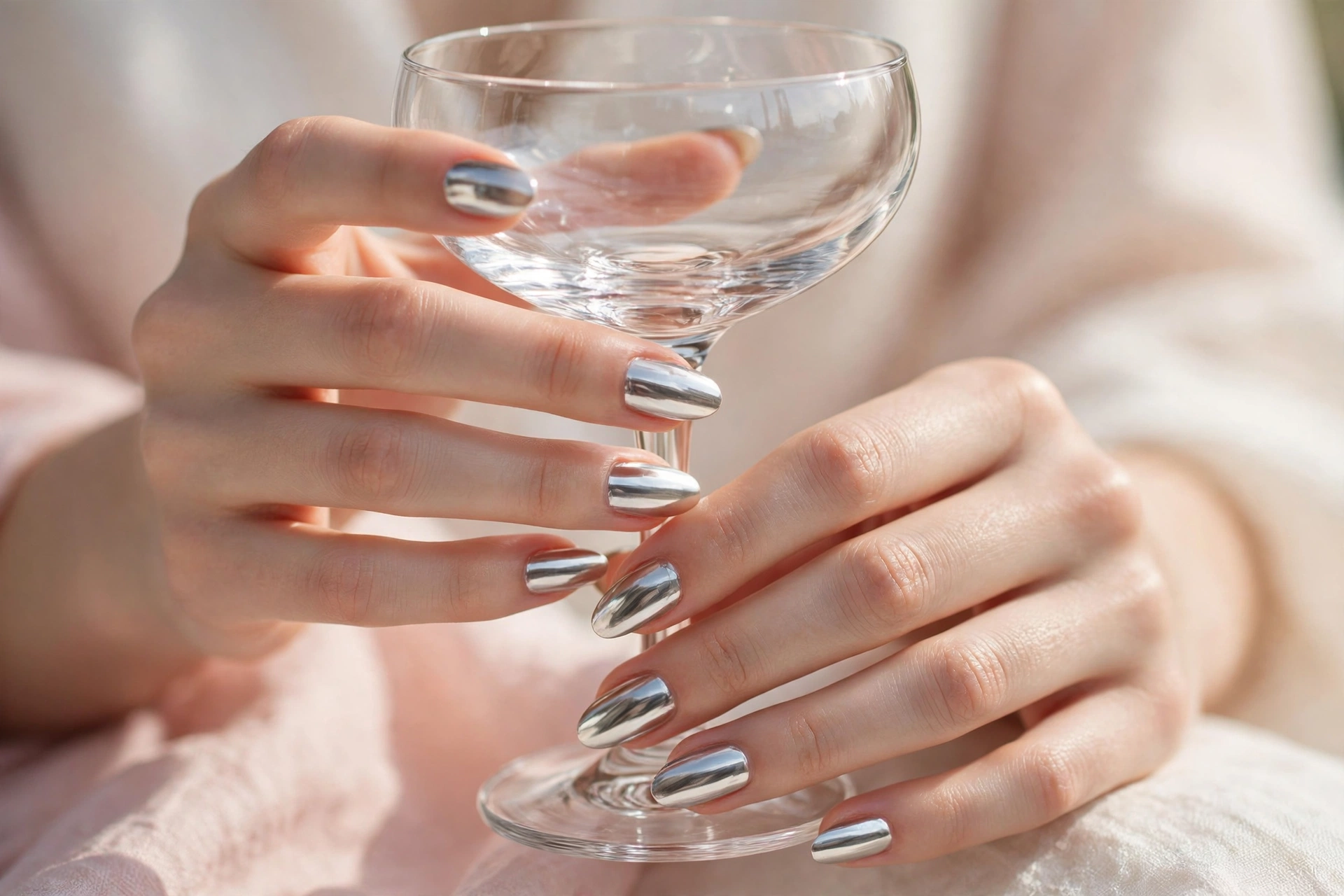
Liquid silver mirror nails on long almond shapes, worn with a coupe glass — the full-coverage design the rest of this list is measured against.
This is silver at full volume: every nail covered in a smooth, liquid-looking mirror finish, with no base colour showing through and no detail competing with it. The effect depends entirely on the surface being flawless, which is why the shape matters. A long almond nail gives the mirror a long, uninterrupted plane to reflect from, and the tapered tip keeps the look elegant rather than heavy.
- Shape and length: Long almond; medium almond works if you prefer less length, but short nails lose some of the mirror effect.
- Colours and finish: Full-coverage silver chrome or a high-shine metallic polish, sealed with a glossy top coat.
- Difficulty: Moderate to high at home, because chrome powder needs a smooth, fully cured base; easy to request in a salon.
- Why choose it: It is the most direct way to wear silver, it photographs beautifully in winter light, and it pairs with both silver jewellery and a black evening dress without clashing.
Wear it when you want the nails to be the accessory. Keep rings simple — one slim silver band is enough — and let the mirror do the rest. If you type all day, expect the tips to show wear first; a thin top-coat refresh mid-week keeps the reflection intact.
2. Frosted Silver French

Silver metallic French tips over a sheer nude base — the most wearable design in this list.
The French manicure has survived every trend cycle because it is honest: a clean nail, a defined tip, nothing to hide behind. Replacing the white tip with silver keeps that honesty and adds a winter edge. The sheer nude base keeps the hand looking soft, while the metallic tip gives the nail a finished, almost frosted outline.
- Shape and length: Medium almond or oval; works well on shorter nails too, since the tip does not need much length to read clearly.
- Colours and finish: Sheer blush nude base with a crisp silver metallic tip.
- Difficulty: Easy to moderate — the tip line is the only fiddly part, and guides or a steady hand solve it.
- Why choose it: It suits offices, family gatherings, and days when you want polish without a statement. It also grows out gracefully, because the base is close to the natural nail.
This is the design to pick if you are new to metallic finishes. It teaches you how silver behaves — how it applies, how it wears, how it chips — without committing your whole nail to it.
3. Silver Starlight Fade

A silver glitter fade from dense sparkle at the tips to sheer nude at the cuticle.
A fade is glitter with manners. Instead of covering the nail in sparkle, the silver is densest at the tip and dissolves toward the cuticle, so the nail looks like it is catching light rather than wearing it. The blush nude base keeps the whole thing warm, which stops the silver from reading cold or harsh.
- Shape and length: Medium oval or almond; short nails can carry it if the fade is kept short and tight at the tip.
- Colours and finish: Sheer blush nude base with fine silver glitter concentrated at the free edge.
- Difficulty: Easy — sponge application makes the gradient forgiving, and mistakes blend into the fade.
- Why choose it: It is festive without being a party-only nail, it hides tip wear well, and it suits every skin tone because the nude base does the blending work.
For a quieter version, keep the glitter to the outer third of the nail. For evenings, push it halfway down. The same design covers both, which is rare.
4. Molten Silver Swirls

Abstract molten silver swirls over a sheer blush base — the most artistic design here.
These swirls look like liquid silver poured across the nail and left to settle. Each nail is slightly different, which is the point: the design reads as hand-painted, not stamped, and the eye follows the curves rather than landing on one spot. The sheer base keeps it light, so the silver never feels heavy even though it covers a good part of each nail.
- Shape and length: Long almond or stiletto-adjacent almond; the swirls need length to flow.
- Colours and finish: Sheer blush nude base with raised-looking silver metallic curves.
- Difficulty: High at home; this is a salon design unless you are confident with a fine liner brush.
- Why choose it: It is genuinely distinctive — no two sets look alike — and it suits people who want their nails to look considered rather than decorated.
Pair it with plain clothes. A grey knit and a simple coat let the swirls carry the detail. Busy prints fight with this design and both lose.
5. Silver Pearl Half-Moon
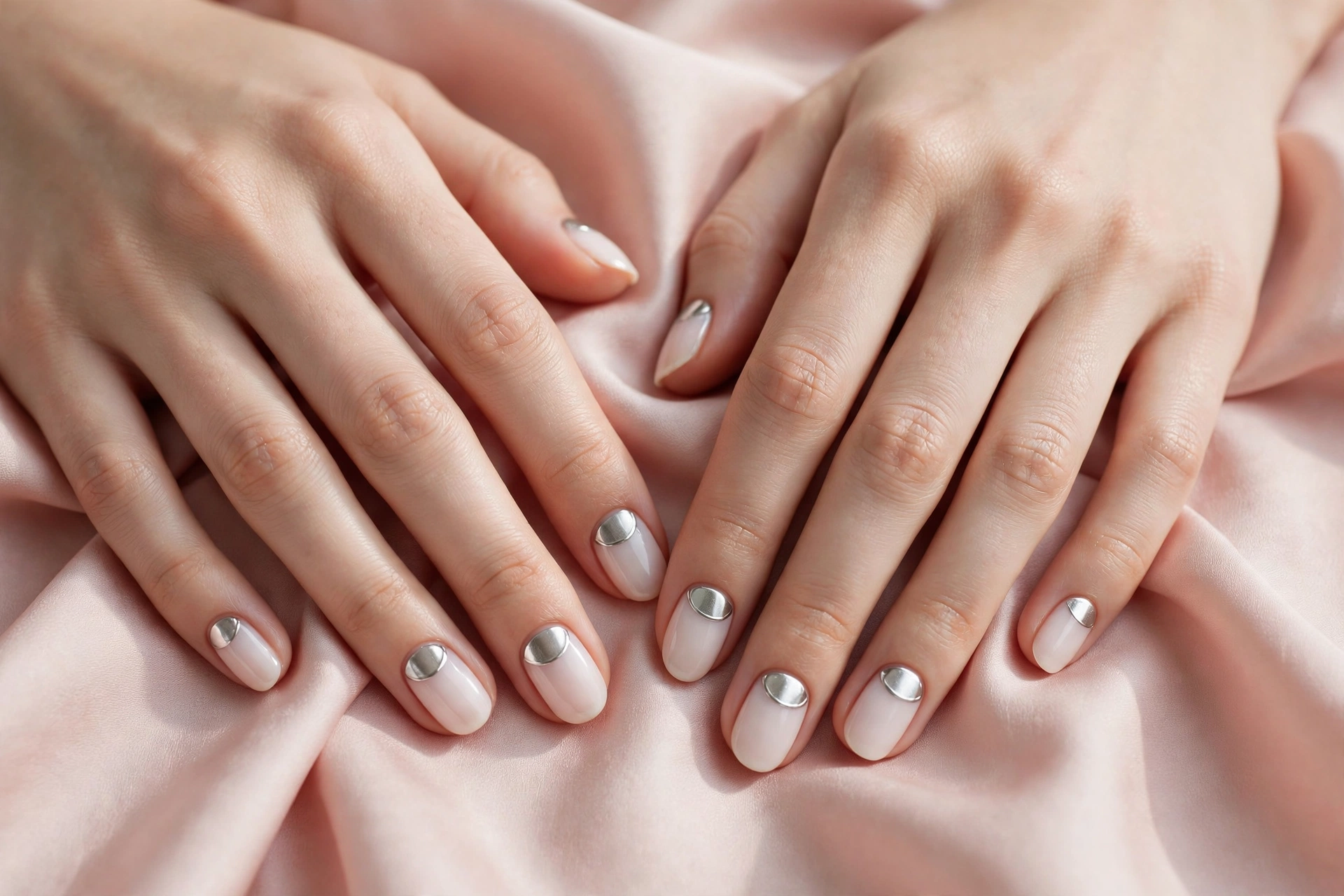
A polished silver half-moon at the cuticle over a soft pearl base.
The half-moon turns the usual French idea upside down: instead of decorating the tip, it decorates the base of the nail, right where the cuticle sits. Over a pearl base the effect is quiet and almost jewellery-like — a small silver crescent that appears when you move your hands and disappears when you hold them still.
- Shape and length: Medium oval or squoval; short nails suit it well because the design lives near the cuticle, not the tip.
- Colours and finish: Soft pearl white base with a solid silver metallic half-moon.
- Difficulty: Moderate — the crescent needs a steady hand or a stencil, but the small area makes corrections easy.
- Why choose it: It is refined, unusual without being strange, and it grows out more gracefully than tip designs because regrowth blends into the pearl base.
This is a good winter wedding-guest or formal dinner choice. It reads as considered from across a table and does not compete with a dress or a centrepiece.
6. Silver Foil on Smoke Grey

Crinkled silver foil scattered over smoky grey — winter’s most forgiving metallic.
Foil is the least fussy way to wear metallics. The flakes are torn, placed, and sealed, and because no two placements are alike, there is no wrong version. Over smoke grey — a colour that already feels like winter — the silver reads as frost on glass rather than decoration pasted on top.
- Shape and length: Short to medium almond or oval; foil suits everyday lengths because it does not need a long nail to show up.
- Colours and finish: Smoky grey cream base with scattered crinkled silver foil.
- Difficulty: Easy — foil placement is forgiving, and top coat smooths everything into place.
- Why choose it: It hides chips and regrowth better than any other design here, it works with grey and charcoal clothes, and it takes minutes rather than an hour.
If you are hard on your nails — gloves, keys, cooking, typing — this is the design that will still look good on day ten. Keep the foil sparse: a few flakes per nail reads as luxury, while a full covering reads as noise.
7. Silver Art Deco Lines

Fine silver art deco lines over deep espresso — geometry doing the talking.
Art deco lines are silver used as drawing, not as covering. Thin chevrons, fans, and parallel lines sit on a dark espresso base, and the contrast does all the work. The darkness makes the silver look brighter than it would on a pale base, and the geometry keeps the design structured — this is the design for someone who likes clean lines in their clothes as well as their nails.
- Shape and length: Medium square-oval; a flat, even nail gives the lines a clean canvas.
- Colours and finish: Deep espresso brown base with fine silver metallic line work.
- Difficulty: High — straight lines and symmetry reward a professional hand or striping tape.
- Why choose it: It pairs with brown and black winter wardrobes, it looks striking in photographs, and it stays elegant at formal occasions where glitter would feel out of place.
Espresso is doing quiet work here too. It is softer than black, warmer against the skin, and it stops the silver from looking cold. If black feels too harsh for you in winter, espresso is the better dark base.
8. Icy Silver Ombré
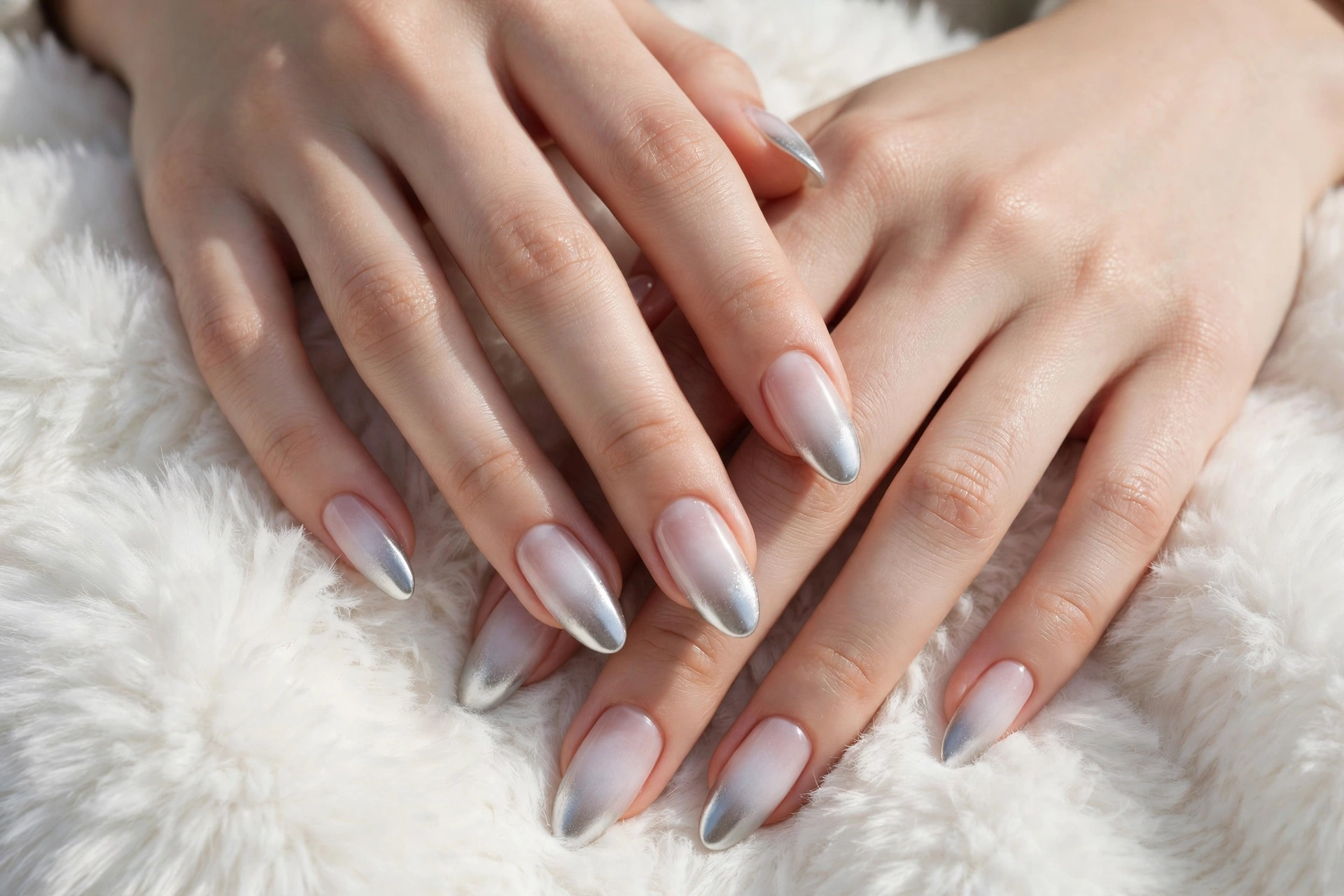
An icy ombré from silver at the tips to frosty white at the cuticle.
Ombré is the gradient version of the mirror: silver at the tip, melting into frosty white near the cuticle, with no hard line anywhere. The result looks like cold air made visible — the closest thing in this list to actual frost. Because the cuticle end is pale rather than metallic, regrowth is far less obvious than with a full metallic nail.
- Shape and length: Long almond; the gradient needs length to fade gradually rather than abruptly.
- Colours and finish: Frosty white to bright silver metallic gradient, glossy finish.
- Difficulty: Moderate — sponge blending takes practice, but the gradient hides unevenness well.
- Why choose it: It is the most winter-specific design here, it elongates the hand, and it suits pale and cool-toned winter outfits from white coats to ice blue knits.
For a softer take, keep the silver to the outer quarter of the nail and let white dominate. For evening, reverse the balance and let silver take over.
9. Silver Snowflake Accents
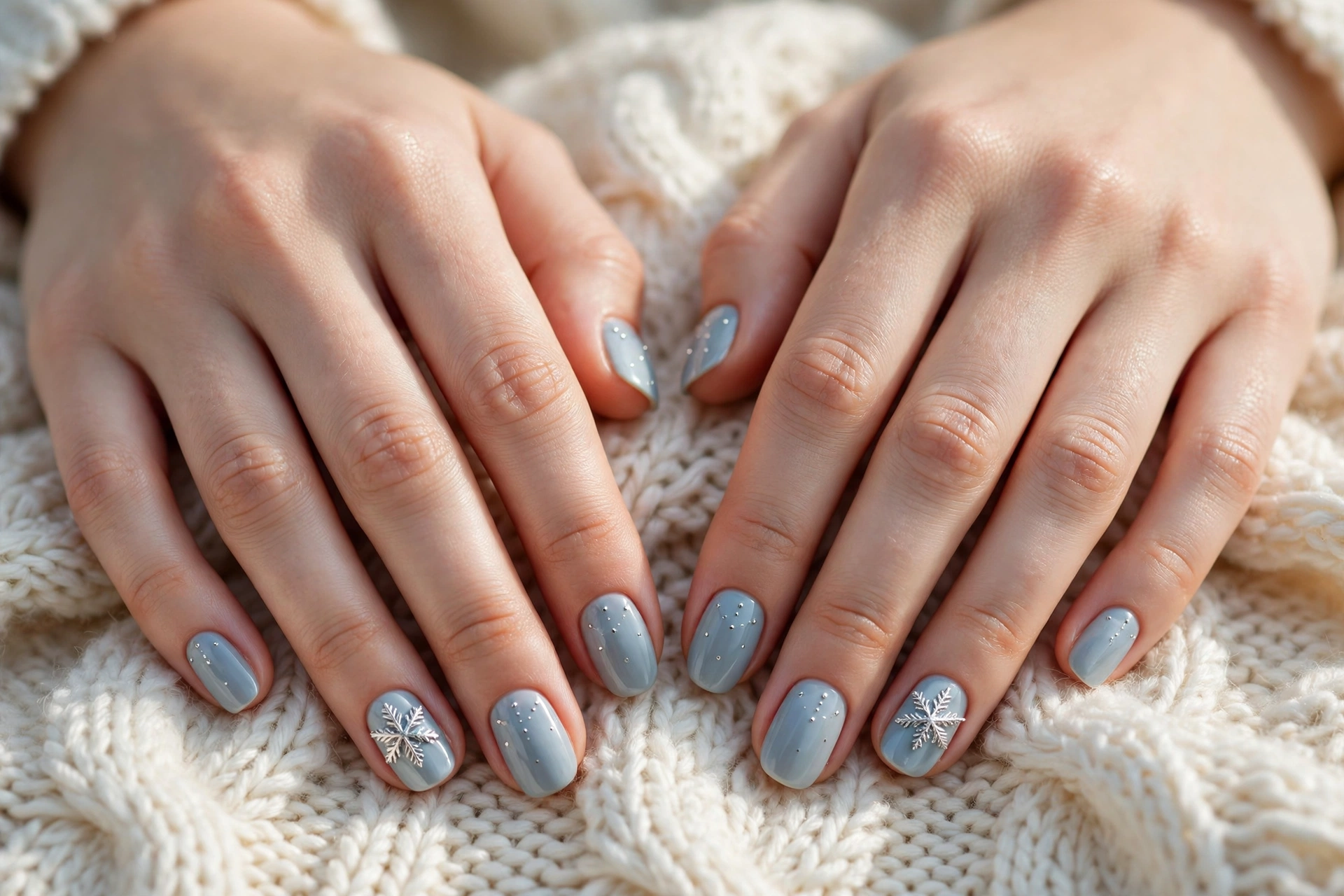
Delicate silver snowflakes on icy blue-grey, with tiny silver dots on the other nails.
Snowflakes are the obvious winter motif, which is exactly why they need restraint. Here the snowflake appears on one accent nail per hand, while the other nails carry only tiny silver dots on an icy blue-grey base. The design says winter without shouting it, and it avoids the costume feel that a snowflake on every nail can tip into.
- Shape and length: Medium almond; the accent nail needs enough width for the snowflake to read clearly.
- Colours and finish: Icy blue-grey cream base with silver metallic snowflakes and micro dots.
- Difficulty: Moderate — stickers or stamping make the snowflake easy; hand-painting it is advanced.
- Why choose it: It is seasonal without being single-occasion, it photographs well for holiday gatherings, and the blue-grey base flatters cool skin tones.
If you love the frost theme but want a design that still works in January, this one survives past the holidays better than most seasonal nails, because the base colour is a wearable grey-blue rather than a festive red or green.
10. Silver Marble Veins

Fine silver veins through white marble — stone, translated to the nail.
Marble nails borrow their logic from stone: a pale ground, broken by thin, wandering veins. In silver rather than grey, the veins catch light as the hand moves, so the nail never looks flat. White marble is also one of the few designs that looks equally at home with a bridal outfit and a grey winter coat, which makes it unusually versatile for the season.
- Shape and length: Medium almond or oval; the veins need a calm, even surface to wander across.
- Colours and finish: White marble base with fine silver metallic veining.
- Difficulty: Moderate — the veins are drawn with a fine brush while the base is still slightly workable, so timing matters.
- Why choose it: It is elegant without effort, it suits short and medium nails, and it pairs with silver jewellery without competing with it.
Readers who like this one may also like our winter marble designs in full, where the same stone idea is explored across more colour combinations: marble nail designs for winter.
11. Silver Cuticle Cuff

A thin silver band framing each cuticle — the cuff, not the crescent.
The cuff is the half-moon’s stricter cousin. Where the half-moon fills a crescent of silver at the base, the cuff draws a single thin band that follows the curve of the cuticle, leaving the rest of the nail sheer nude. The difference sounds small; on the hand it is clear. The cuff reads as a piece of jewellery worn on the nail itself, and the sheer base keeps the whole hand looking bare and clean.
- Shape and length: Medium oval; short nails work too, since the design does not depend on the tip.
- Colours and finish: Sheer nude blush base with a thin silver metallic cuff band at the cuticle.
- Difficulty: Moderate — the band must follow the cuticle curve evenly, which takes a steady hand.
- Why choose it: It is minimal, modern, and genuinely different from the French and half-moon designs it sits beside. It also suits people who wear rings, because the cuff echoes a band without duplicating one.
Keep the cuticles in good shape for this one. A cuff draws the eye to the base of the nail, so neat cuticles are part of the design, not an afterthought.
12. Silver Glazed Frost
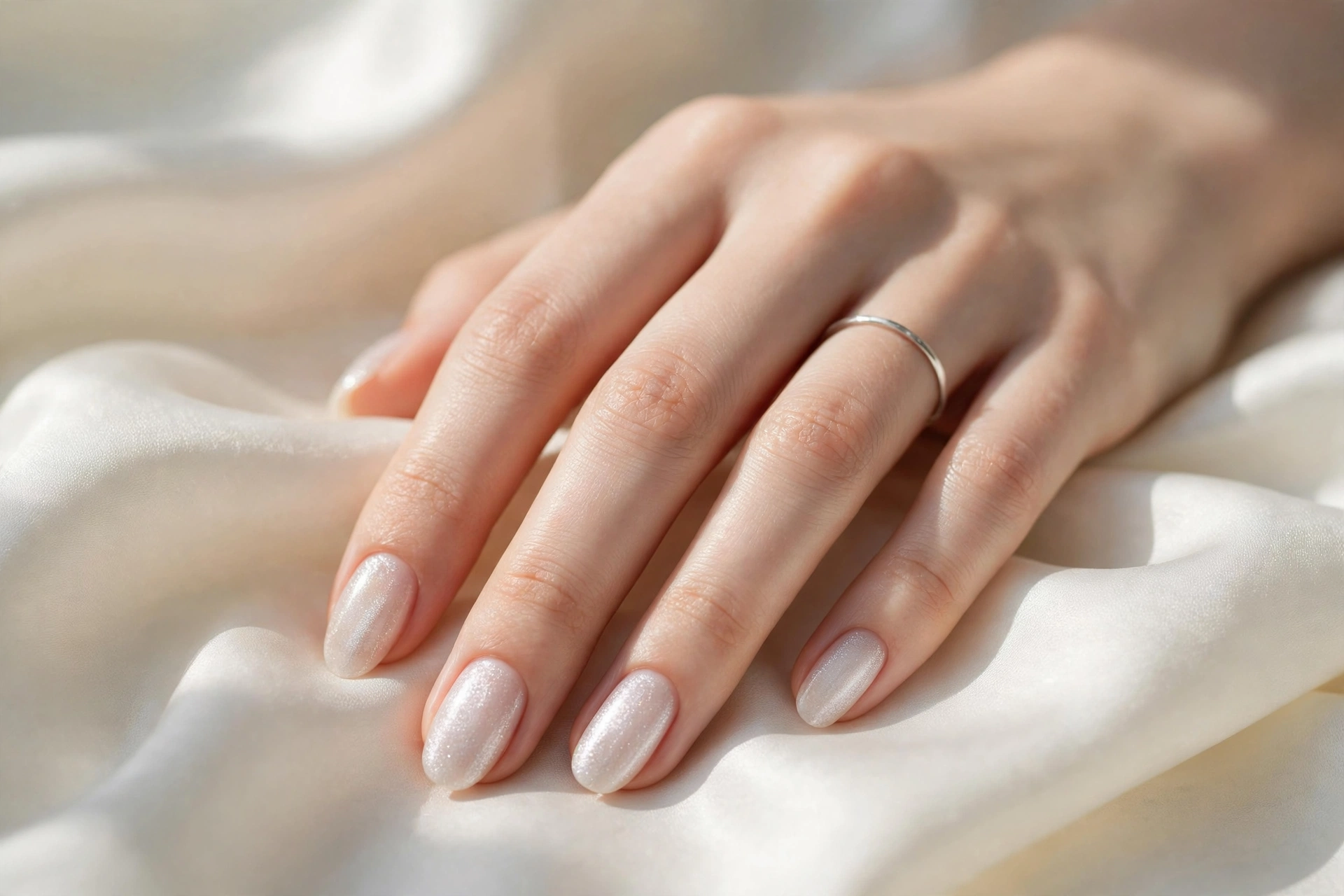
A sheer silver glaze over milky white — the quietest silver in this list.
The glaze is silver at its lowest volume: a fine metallic shimmer suspended over a milky white base, so the nail looks frosted rather than finished in metal. There is no mirror, no sparkle point, no line — just a soft glow that appears when the light hits. It is the design for people who like the idea of silver but not the attention that a mirror finish brings.
- Shape and length: Medium almond or oval; any everyday length works, because the glaze does not need length to show.
- Colours and finish: Milky white sheer base with a fine silver glazed shimmer throughout.
- Difficulty: Easy — one or two coats of a shimmer polish, sealed well, is the whole design.
- Why choose it: It is the most forgiving design here for chips and regrowth, it suits workplaces with unspoken dress codes, and it layers beautifully under silver rings.
If you are choosing your first silver design of the season, start here. It will teach you whether you want more silver or less, and you can move up to the French or the mirror from a position of knowledge rather than guesswork.
How to Choose Silver for Your Skin Tone and Occasion
Choose by undertone, maintenance, and occasion. Cool undertones suit bright silver and icy bases; warm undertones suit silver softened by nude, grey, or espresso. If you want low maintenance, pick foil, glaze, or French tips. If the occasion is formal, pick mirror, marble, or art deco lines.
Undertone is the part people overthink. You do not need to diagnose yourself precisely. Hold a silver ring and a gold ring against your hand in daylight: if silver looks quiet and natural, bright silver designs like the mirror and the icy ombré will suit you easily. If gold looks easier, you are not shut out of silver — you just want it softened. A nude, blush, or espresso base under the silver warms the whole design, and the foil-on-smoke design is the easiest bridge of all.
Occasion matters just as much. For work, the French, the glaze, and the cuff keep the hand looking groomed without drawing comment. For dinners and parties, the mirror, the starlight fade, and the snowflake accents give the hand something to say. For a wedding — yours or someone else’s — the pearl half-moon and the silver marble are the safest elegant choices, because they photograph softly and do not compete with a dress.
Length is the third decision, and it is practical rather than aesthetic. Short nails suit the French, the foil, the cuff, and the glaze. Medium nails carry everything in this list. Long nails are where the mirror, the swirls, and the ombré earn their keep, because they need surface area. If you are growing your nails out, start with a short-nail design and move up as the length arrives.
How to Make Silver Metallic Nails Last Through Winter
Silver metallic nails last longest when the base is smooth, the free edge is sealed, and the hands are protected from water and harsh cleaning. Wear gloves for washing up, reapply top coat every three to four days, and fix small chips at the tip before they spread across the nail.
Winter is hard on nails for specific reasons: cold air dries the nail plate, hot water strips oils, and gloves rub the free edge. Cuticle oil, applied nightly, is the single most useful habit — it keeps the nail flexible so the metallic surface bends rather than cracks. Hand cream helps the skin, but oil is what helps the nail itself.
When a chip does appear, do not peel the polish. File the edge smooth, dab a little matching polish on the spot, and seal with top coat. With foil and fade designs you can often hide the repair entirely. With a mirror finish, a chip is harder to disguise, which is why mirror nails suit people who can get back to the salon or who accept a shorter wear time in exchange for the drama.
Removal deserves the same care. Soak rather than peel, especially with chrome powder and glitter, because peeling lifts layers of the natural nail and the next set will never look as smooth. A smooth nail is the foundation of every design in this article, so protecting it between sets is part of the design, not separate from it.
More Winter Reading
If silver is your starting point, these LuxeSleek guides sit naturally beside it: gold nails for winter if you want to compare the two metallic families before committing, how to do chrome nails at home for the powder technique behind the mirror finish, marble nail designs for winter for more stone-inspired ideas, and frost and icy blue nail designs if the icy end of this list is the part you loved most.
Frequently Asked Questions
Do silver metallic nails suit everyone?
Yes, with the base colour adjusted. Bright silver suits cool undertones directly, while warm undertones suit silver softened by a nude, blush, grey, or espresso base. The design matters too: a sheer glaze or a French tip is far easier to wear than a full mirror, so anyone can find a version that feels natural.
How long do silver metallic nails last?
With gel or a careful regular-polish application, expect around one to two weeks of good wear, with tips showing the first signs of use. Foil, fade, and glaze designs hide wear longest, while a full mirror shows chips earliest. Sealing the free edge and reapplying top coat mid-week extends every design noticeably.
Is silver or gold better for winter nails?
Neither is objectively better; they do different jobs. Silver reads cooler, sharper, and more frost-like, and it pairs naturally with grey, white, blue, and black winter clothes. Gold reads warmer and richer, and suits warm outfits and festive occasions. If your jewellery and wardrobe lean silver, silver nails will look more coherent.
Can I do silver metallic nails at home?
Several designs here are genuinely home-friendly: the French tip, the glitter fade, the foil, and the glaze all need only polish, a steady hand, and top coat. Chrome powder mirrors, molten swirls, and art deco lines are harder at home and usually worth a salon visit, because they depend on a perfectly smooth base and precise tools.
What colours go best with silver metallic nails?
Silver pairs most easily with neutrals: white, grey, black, navy, and espresso all let the metallic finish stand out cleanly. Blush and icy blue soften it, while deep green and burgundy give it a festive contrast. The safest rule is to let silver be the brightest thing on the hand and keep clothes and jewellery quieter.
How do I stop silver polish from chipping?
Start with a smooth, ridge-free base, apply thin coats, and seal the free edge of each nail with base and top coat. Wear gloves for washing up, apply cuticle oil nightly to keep nails flexible, and touch up small tip chips early before they spread. Soak polish off instead of peeling it.