

On this page
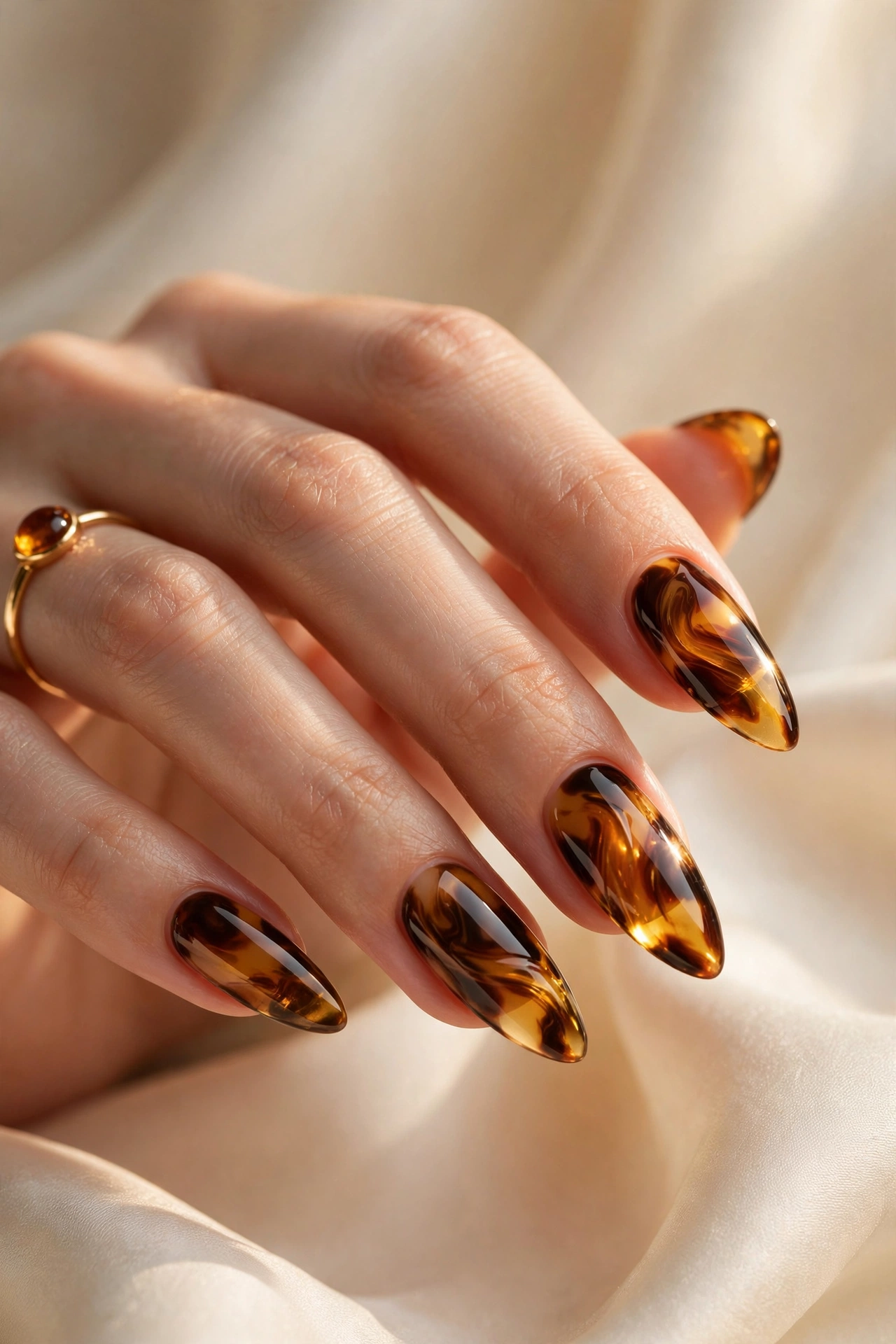
Some nail trends arrive with a bang and leave just as fast. Tortoise shell nails are not one of them. This is a pattern with genuine staying power — the kind of design that looks as right in a boardroom as it does at a candlelit dinner, and somehow never photographs badly. If you’re hunting for tortoise shell nails for fall that feel rich, warm, and quietly expensive, you’ve come to the right place.
Below you’ll find 20 distinct tortoise-shell designs, from the classic full-tortie set to gold-foil gilded versions, French-tip tortie, matte finishes, and the shapes that show the pattern off best. Every design comes with its own visual reference, honest notes on the look, the base colors that work, and finish guidance — screenshot with confidence for your nail tech, or recreate the simpler ones yourself at the kitchen table.
Why Choose a Tortoiseshell Pattern?
Tortoise shell has been circling fashion for decades — first on eyeglass frames and hair accessories, then on handbags, and finally, inevitably, on nails. Its comeback story isn’t really a comeback at all; it’s a slow, steady coronation. The pattern resurfaced in a big way a few seasons ago when vintage-inspired accessories took over street style, and nail artists quickly realized what the eyewear designers already knew: amber, caramel, and deep espresso swirled together flatter every skin tone on the planet.
There’s also a practical reason it keeps winning. A translucent base or irregular pattern can make contrast at the growing edge less obvious, but it does not prevent chips, lifting or regrowth. Choose the appearance you enjoy and follow the maintenance instructions for the actual service. It sits in that rare sweet spot between “I tried” and “I tried too hard,” which is exactly where luxury lives.
And then there’s the photography factor. The tortie pattern is translucent, layered, and dimensional, which means it catches light the way amber jewelry does — glowing from within rather than sitting flat on the nail. On camera, those amber depths read as warmth and richness; in person, they read as expensive. If your manicure needs to survive both the office and your camera roll, tortoise shell is one of the safest, most beautiful bets you can make this fall. For more seasonal inspiration in the same warm palette, our Halloween nail art ideas lean into autumn’s richer, moodier side.
The 20 Tortoise Shell Nail Designs
1. The Classic Full Tortoise

The one that started it all: every nail in the signature tortie pattern, finished in high gloss. The classic build layers a caramel-amber base with irregular blobs of chocolate brown and near-black, all slightly translucent so the colors melt into each other like real tortoiseshell. Ask your tech for medium almond — the shape gives the pattern room to breathe. This is the most versatile tortie of the twenty: it goes with camel coats, black turtlenecks, gold jewelry, and absolutely everything in your fall wardrobe. If you’re trying tortoise shell for the first time, start here.
2. Tortie Accent, Nude Everything Else
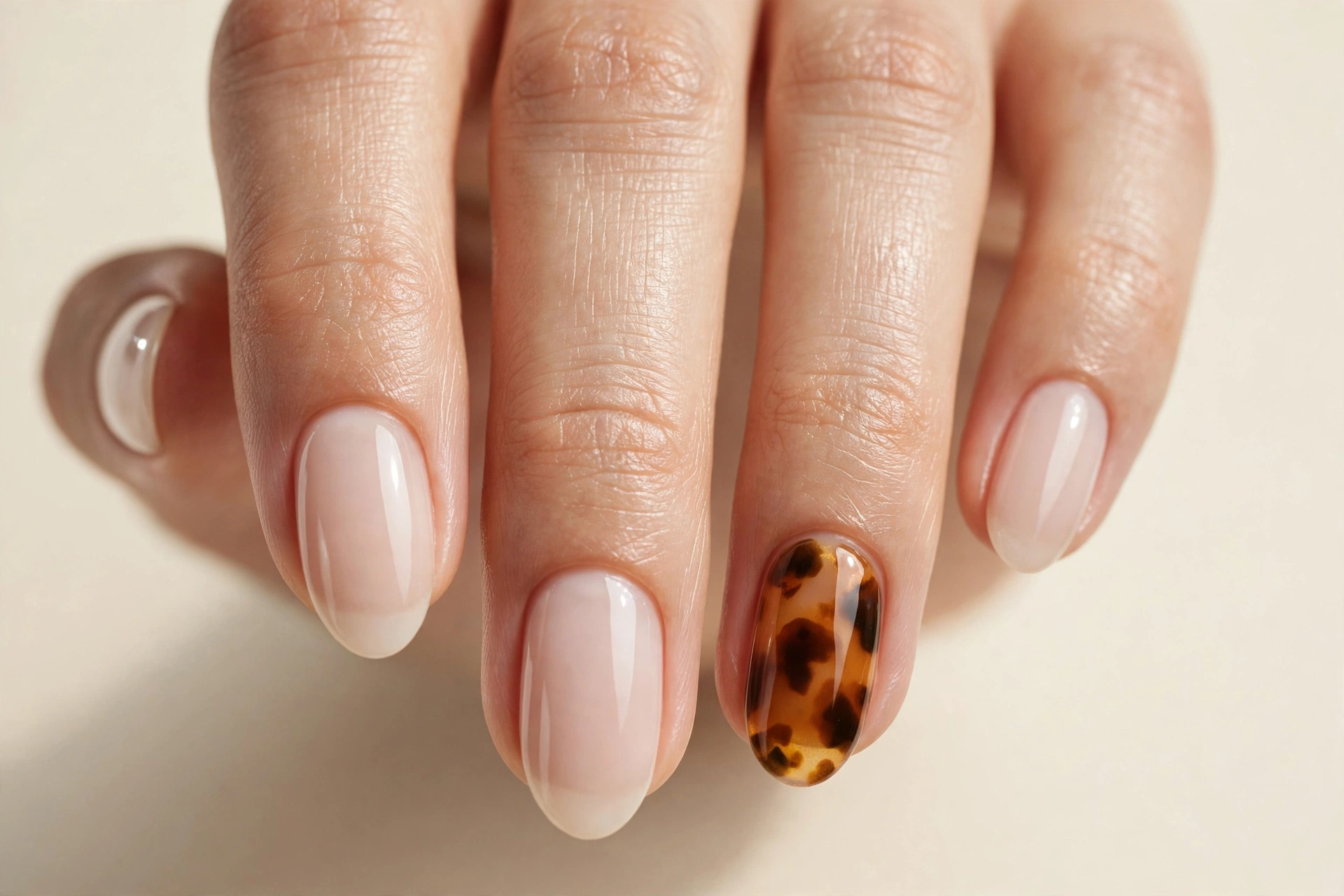
Not ready to commit all ten nails? The accent approach keeps nine nails in a sheer milky nude and gives the ring finger the full tortie treatment. It’s the quiet-luxury version of the trend — most people will register “beautiful manicure” before they register “pattern.” The nude base should be sheer enough to look like your nails but better; the tortie accent then reads as intentional jewelry. This is also the smartest tortie for conservative workplaces and for anyone growing out short nails, since the pattern on a single nail draws zero unwanted attention.
3. Tortoise French Tips

Think of this as the French manicure’s cooler older sister. Instead of white tips, the smile line is painted in the tortoise pattern over a sheer nude base — all the polish of a French, none of the predictability. The trick is keeping the tortie band thin and even; too thick and it reads as a full design rather than a tip. This looks particularly refined on short square or squoval nails, where the tip has enough width to show the pattern’s detail. A translucent base or irregular pattern can make contrast at the growing edge less obvious, but it does not prevent chips, lifting or regrowth. Choose the appearance you enjoy and follow the maintenance instructions for the actual service.
4. Matte Tortoise

Gloss makes tortie glow; matte makes it smolder. A velvet matte top coat transforms the same amber-brown pattern into something moodier and more editorial — think suede rather than lacquer. The matte finish mutes the translucency slightly, so the pattern reads more graphic and modern. Use a compatible matte finish and follow its aftercare directions. Worth it for the drama.
5. Gilded Tortie with Gold Foil

Tortoise shell already looks expensive; gold foil makes it look like it belongs in a vault. Irregular flecks of gold leaf are pressed into the tortie while the color is still tacky, then sealed under gloss. The gold catches light as you move your hands, giving the set a jewelry-like quality that photographs spectacularly. Keep the foil sparse — three to five flecks per nail is plenty — and keep it away from the cuticle so grow-out stays clean. This is the tortie to wear to weddings, holiday parties, and anywhere you want your hands noticed.
6. Almond Tortoise Elegance
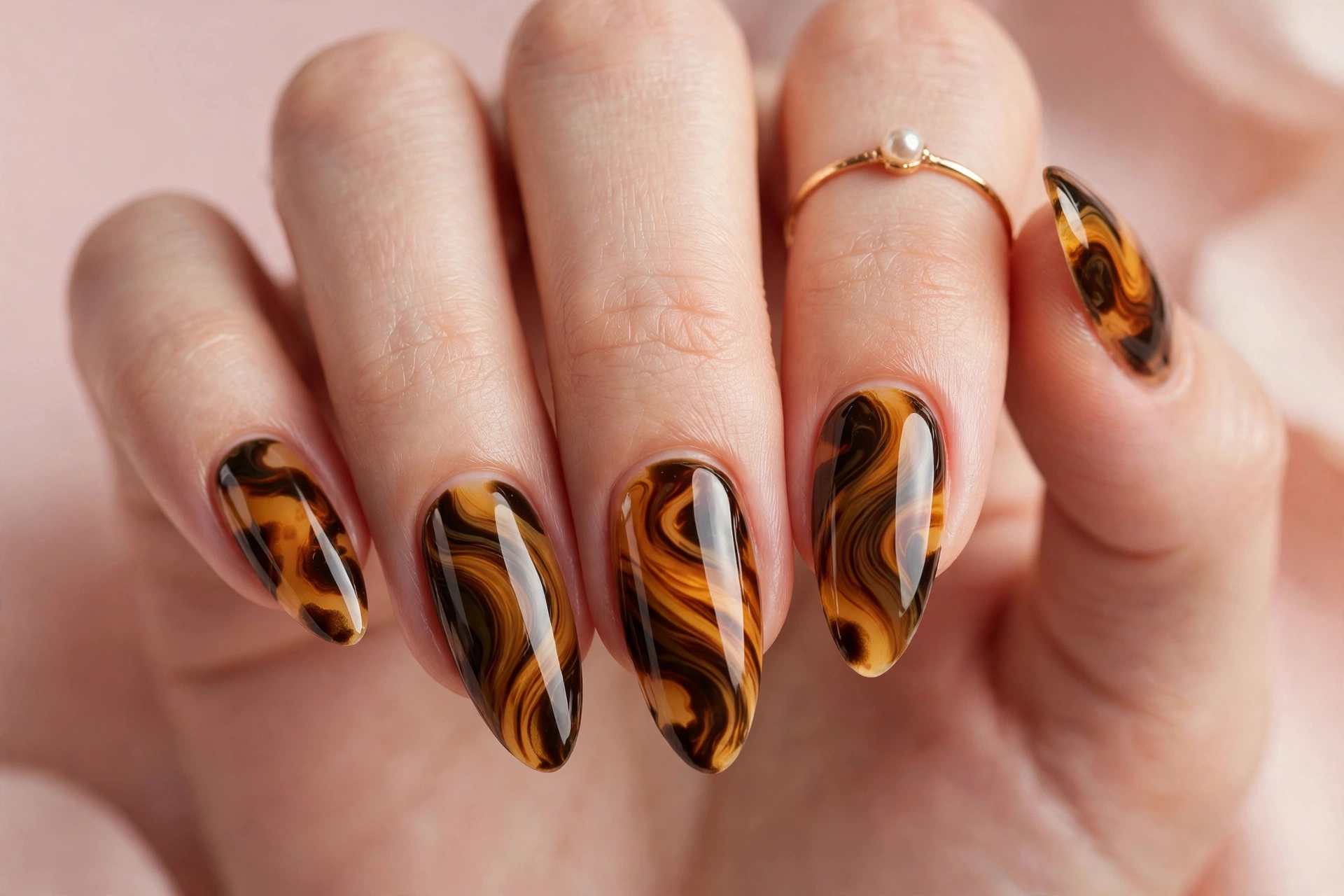
If tortoise shell has a soulmate shape, it’s the almond. The tapered, elongated silhouette gives the pattern its longest possible canvas, letting the amber swirls stretch and flow the way they do on real tortoiseshell accessories. On long almonds, ask your tech to scale the tortie blobs up slightly — tiny blobs on a long nail look busy, while larger, bolder patches look deliberate and expensive. This is the most feminine, most “old money” of the twenty designs, and the one most likely to get you stopped by strangers.
7. Square Statement Tortie

Square nails give tortoise shell a completely different personality — sharper, bolder, more fashion-week. The straight edges frame the organic pattern like a gallery frame, and the contrast between geometric shape and fluid swirls is what makes this so striking. Medium-long squares work best; very short squares don’t give the pattern enough room. This is the tortie for anyone whose style leans structured — blazers, architectural jewelry, clean lines. The pattern softens the severity of the square just enough.
8. Coffin Tortoise Drama

Coffin (ballerina) nails turn tortoise shell up to full drama. The long, tapered shape elongates the amber swirls into something almost liquid, and at this length the pattern reads from across the room. Because coffins are almost always enhancements, this is strictly a salon design — and you should see your tech’s tortie work before committing, since a muddy tortie at this length is very visible. Done well, it’s the most head-turning design on this list: equal parts vintage glamour and modern edge.
9. Short and Sweet Tortie
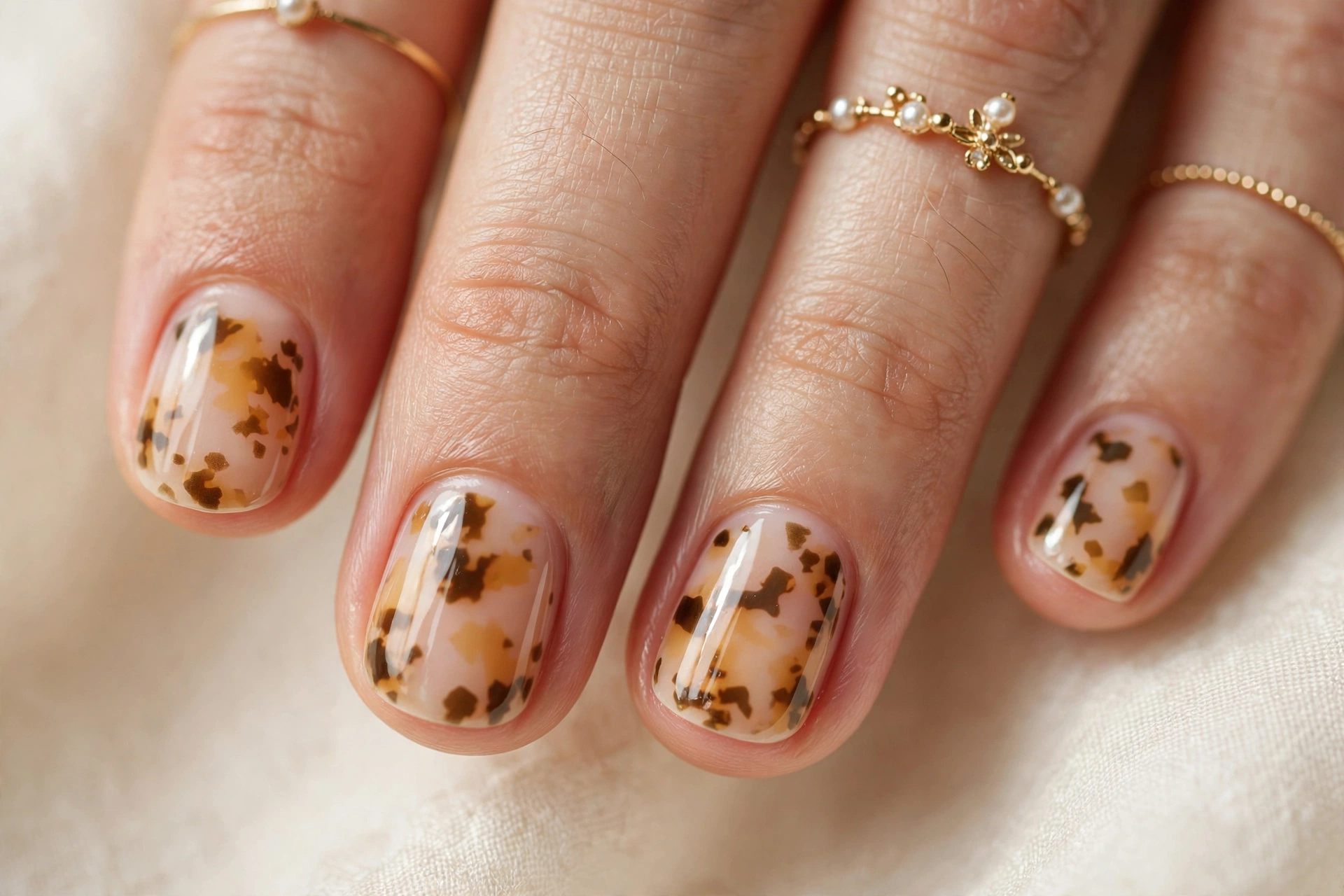
Proof that tortoise shell doesn’t need length. On short natural nails, the trick is scaling the pattern down — smaller, finer blobs in lighter ambers so the design doesn’t overwhelm the nail. The result is delicate and surprisingly chic, like tortoiseshell jewelry in miniature. A translucent base or irregular pattern can make contrast at the growing edge less obvious, but it does not prevent chips, lifting or regrowth. Choose the appearance you enjoy and follow the maintenance instructions for the actual service. If you’ve been told nail art “isn’t for short nails,” this design is your rebuttal.
10. Amber Light Tortie
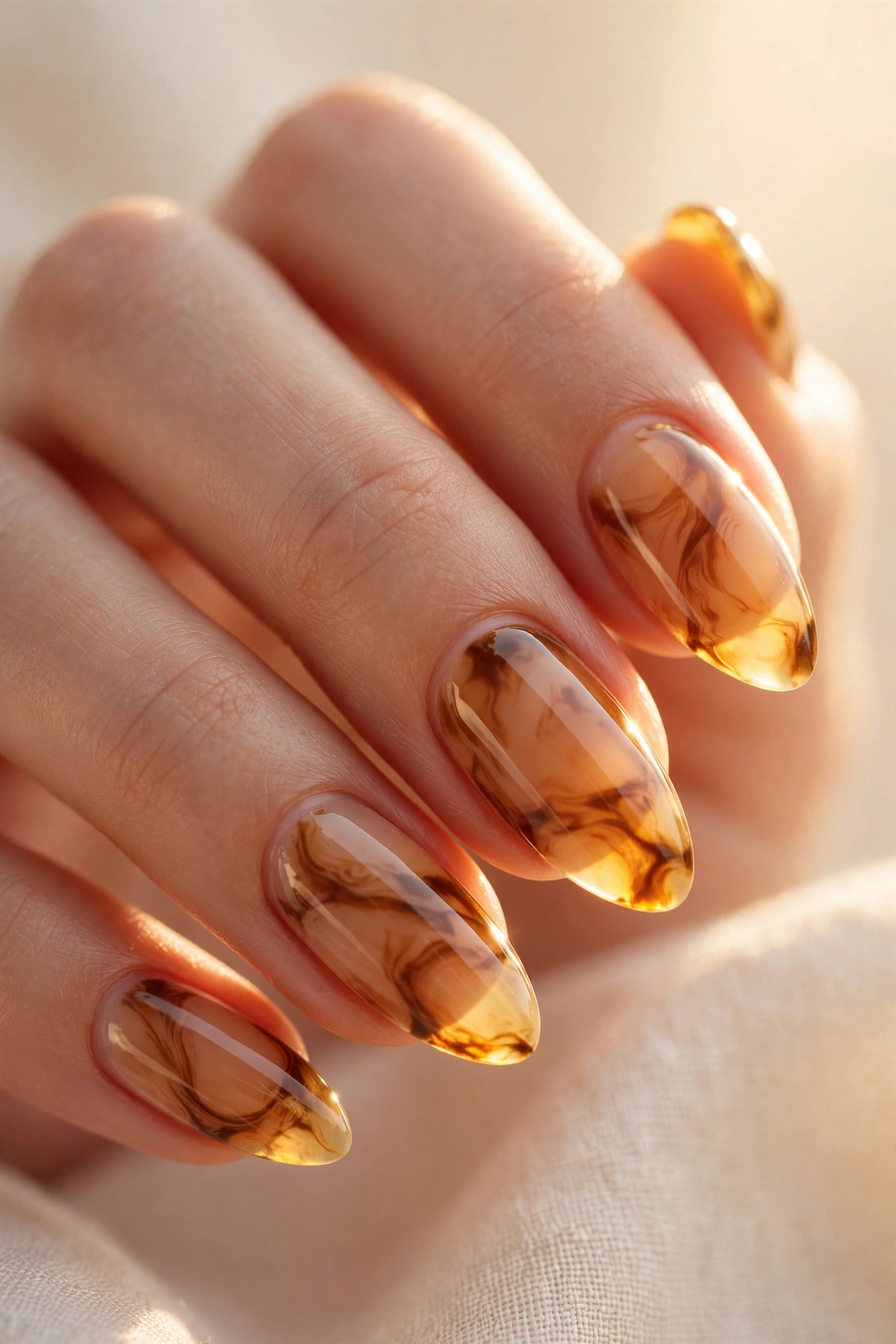
Most tortie leans dark; this one goes light. Built on honey and caramel ambers with soft milk-chocolate veining instead of near-black, the amber-light version glows like backlit honey. It’s the best tortie for fair skin tones and for anyone who finds the classic version too heavy. The lighter palette also photographs beautifully in natural daylight — golden hour makes these nails look lit from within. Ask your tech to keep the darkest color to a medium brown; the moment black enters, it becomes a different design.
11. Espresso Dark Tortie

Here’s tortie after dark. Deep espresso, dark chocolate, and black dominate, with only whispers of amber glowing through — like looking into a really good cup of coffee. This is the moodiest, most autumnal tortie on the list, and it pairs devastatingly well with black, burgundy, and forest green wardrobes. On medium and deep skin tones, it’s pure richness. Wear and staining vary between products and application methods. Use the base and removal directions for the chosen system; gel is not an automatic solution to staining or a guarantee of weeks without chips. Ask a technician about persistent discoloration rather than buffing it away.
12. Tortie and Onyx

Alternating tortie nails with solid glossy black creates a rhythm that’s pure high fashion — pattern, solid, pattern, solid. The black makes the amber in the tortie look even warmer by contrast, and the overall effect is graphic enough to feel modern while the tortie keeps it from feeling stark. This is an excellent choice for long nails, where the alternation has room to register. Keep the black truly black (not off-black or faded) and the top coat glassy; the whole design lives or dies on that contrast.
13. Tortie and Cream

If tortie-and-onyx is drama, this is its softer sibling: tortie alternating with warm cream. Where the black version is drama, this is serenity — the cream lightens the whole set and makes it feel bridal-adjacent, almost bridal-shower appropriate. It’s also the most office-friendly full tortie on this list. Use a true warm cream (not stark white, which fights the amber tones) and keep both the tortie and the cream in the same gloss finish so the set reads as one intentional design rather than two ideas.
14. Tortoise with Gold Tips
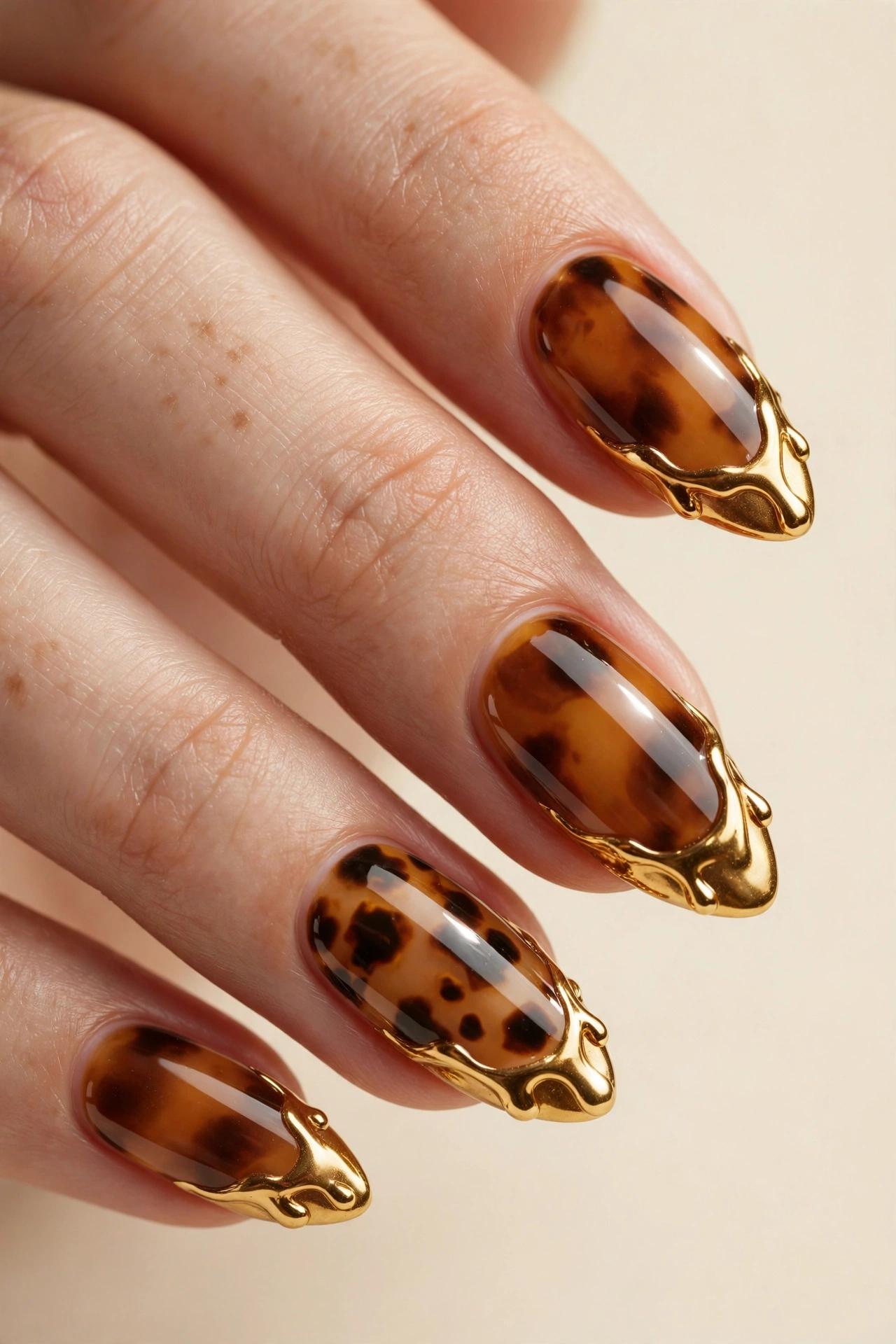
Tortie on the nail bed, molten gold on the tips — a combination that sounds maximalist and wears surprisingly elegant. The gold tip acts as a frame, containing the organic pattern and giving the design a finished, jewelry-like edge. This works best on almond or oval shapes where the tip follows a natural curve. Use a true metallic gold (chrome powder or a rich metallic polish, not glitter) — glitter tips would fight the tortie’s translucency. The result is festive enough for the holidays while staying firmly in the luxury lane.
15. Tortoise Marble
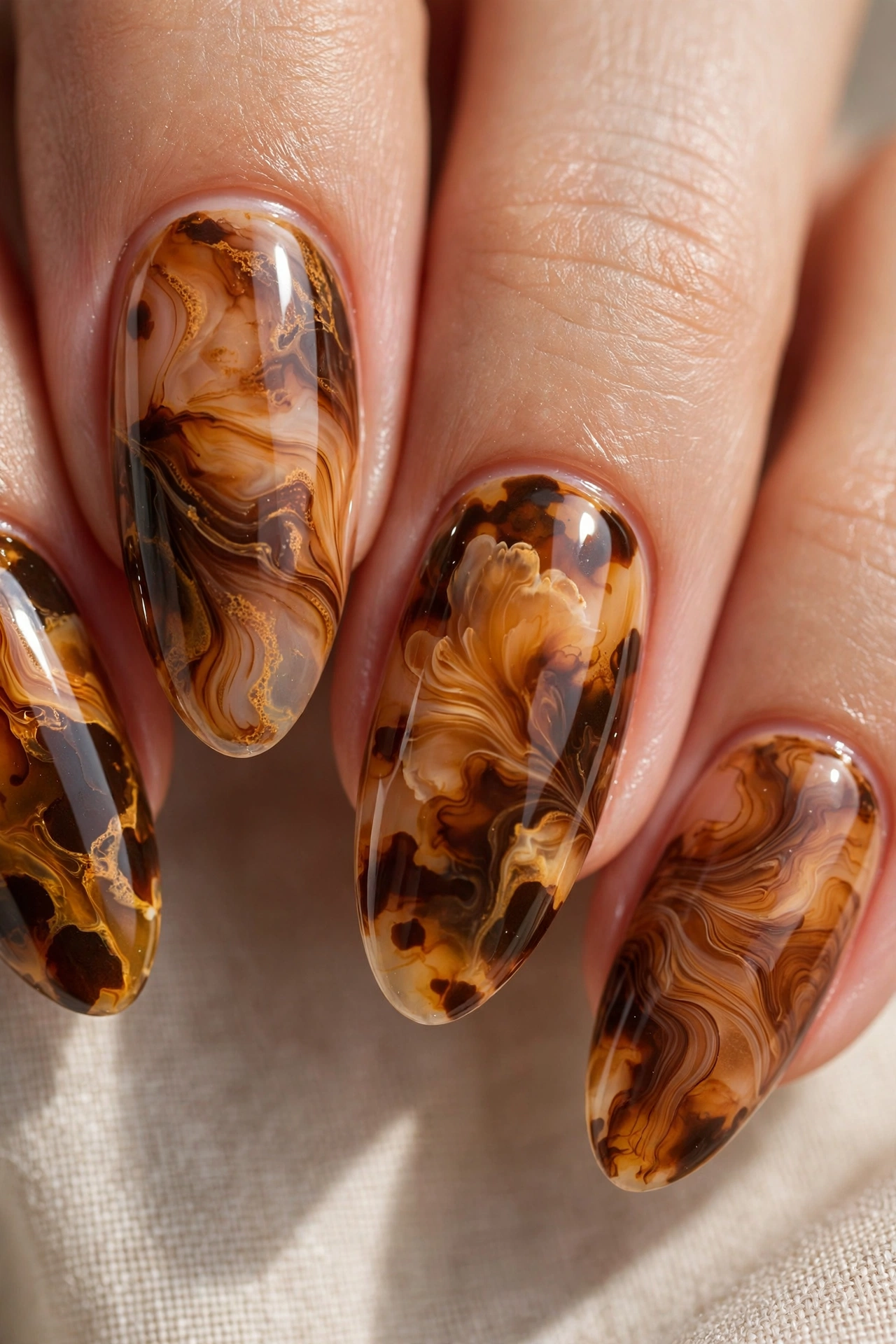
Tortoise shell meets water marble: the amber and brown blobs are dragged and swirled into soft marble veining using blooming gel. The result keeps tortie’s color story but replaces its characteristic blobs with flowing, smoky movement — less “tortoiseshell accessory,” more “agate stone.” This is a tech-level technique; the blooming has to be controlled or the colors muddy into brown soup. Ask to see your tech’s marble portfolio first. When it’s done right, it’s the most artistic, one-of-a-kind design on this list — genuinely no two nails alike.
16. Vintage Seventies Tortie

Lean into the retro: warmer, more caramel-heavy tortie with a distinctly seventies palette — think burnt caramel, golden amber, and chocolate, with barely any black at all. The overall impression is sunnier and more nostalgic than the classic, like a vintage handbag found in perfect condition. This version pairs beautifully with corduroy, suede, and gold-rimmed sunglasses — the full seventies fantasy. It’s also the tortie most likely to earn “those are so cool” from people who don’t usually notice nails.
17. Tortoise Ombré
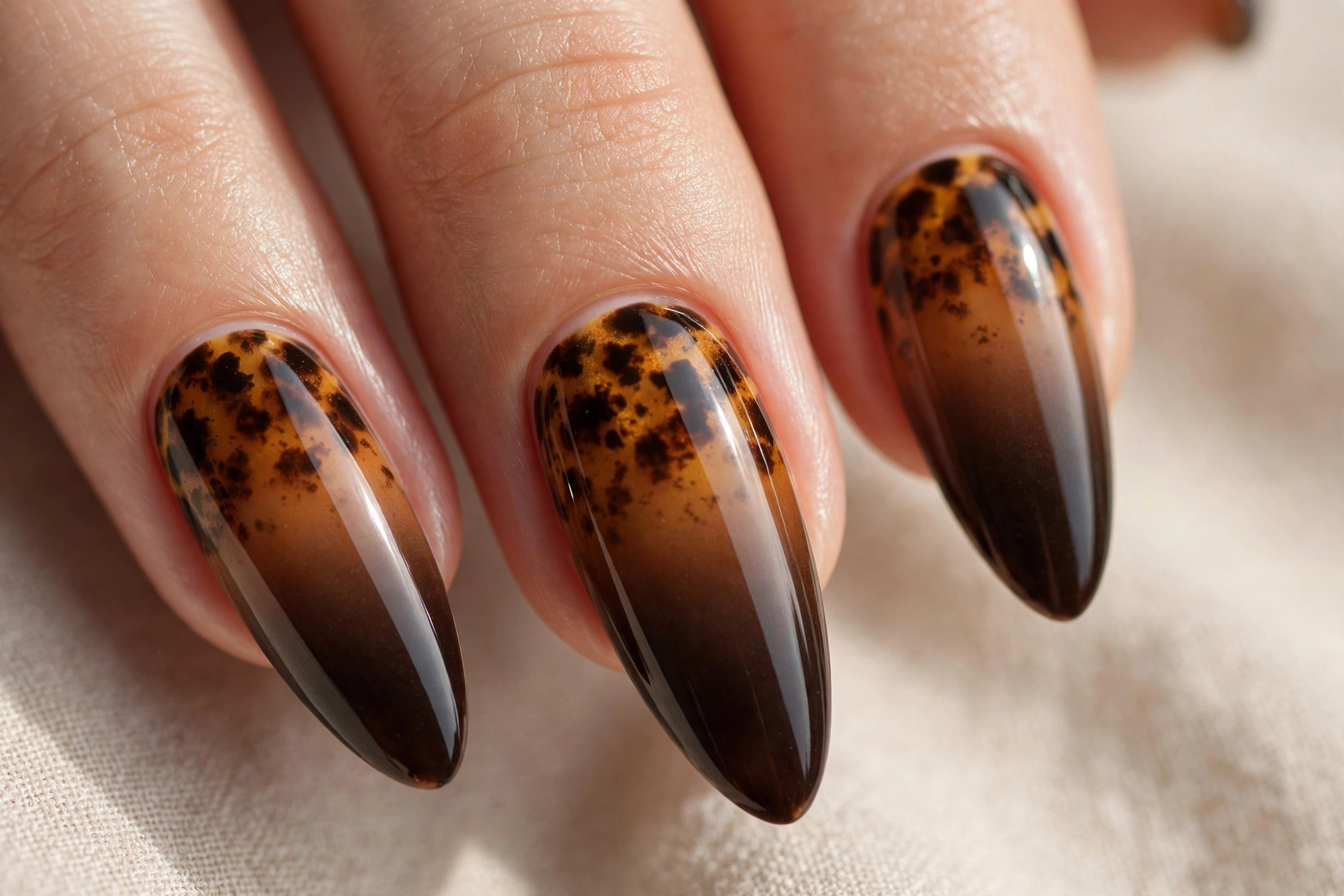
The tortie pattern starts dense at the cuticle and dissolves into solid deep espresso at the tips — or the reverse, if you prefer the drama at the base. The ombré transition gives the design movement and makes it feel custom rather than stamped. This is one of the more technical torties: the fade has to be seamless, which means sponging or airbrushing the transition, not just painting it. The payoff is a set that looks different from every angle and grows out more gracefully than almost any other design here.
18. Tortie Half-Moon

This one borrows a vintage manicure structure and fills it with tortie: the half-moon (lunula) at the base of each nail is painted in tortoise shell, while the rest of the nail stays sheer nude. It’s a detail most people won’t consciously register — they’ll just think your manicure looks “interesting” — which is exactly its charm. The half-moons need to be crisp; use a fine brush or a half-moon guide sticker. This is the insider’s tortie, the one nail artists choose for themselves, and it wears beautifully because the nude field hides all grow-out.
19. Double Tortie Layers
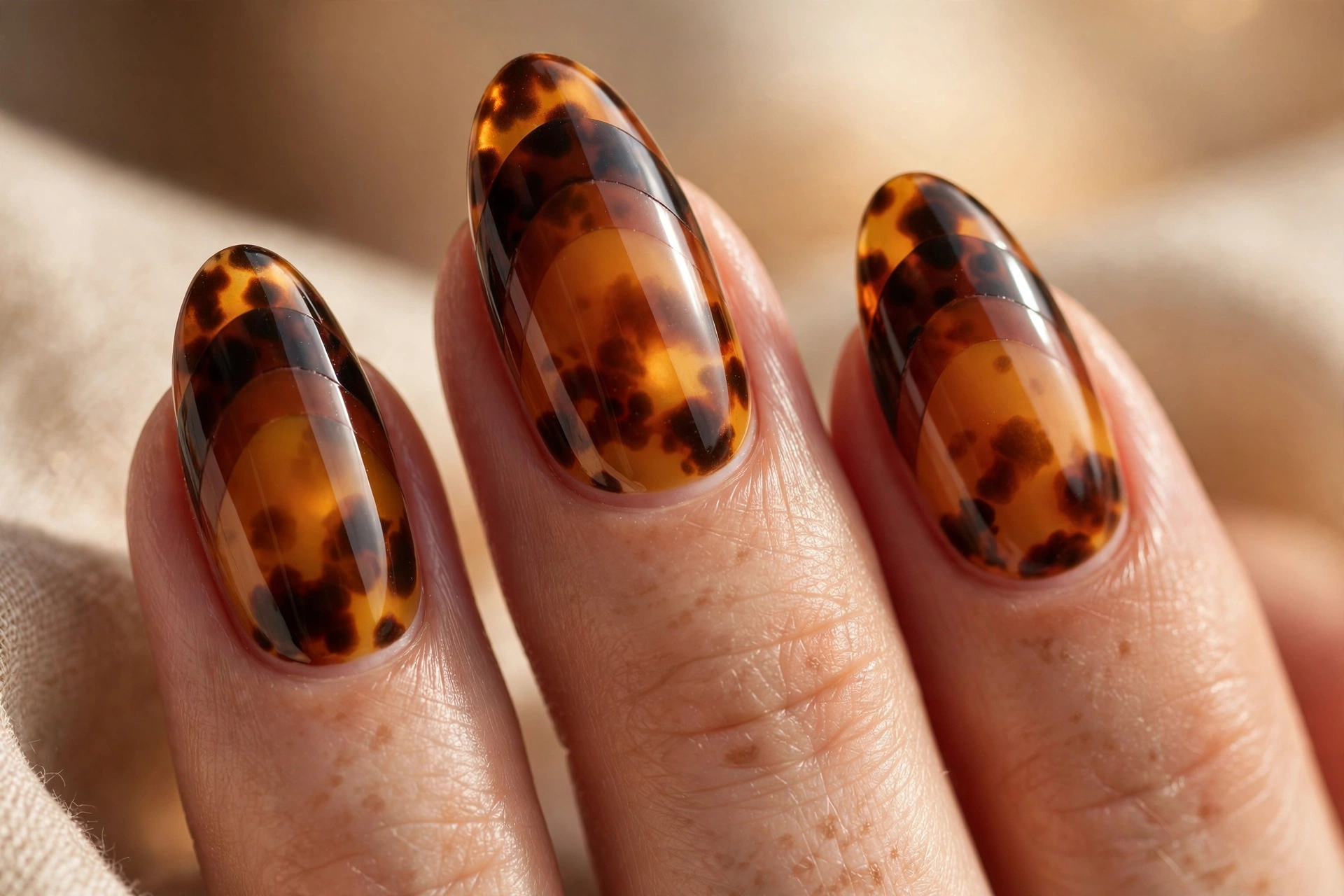
For the committed: a full tortie base with a second, darker tortie layered just on the tips — tortoise on tortoise. The double layer creates genuine depth, like looking through amber at more amber. It sounds like a lot, but because both layers share the same color family, the result is tonal and rich rather than busy. This is a maximalist design that still reads as tasteful — the tortie equivalent of layering gold necklaces. Best in gel, where the layers can be built thin without bulk.
20. Glazed Tortoise

Remember the glazed-donut nail craze? This is what happens when it meets vintage tortie: a sheer chrome veil floated over the tortoise pattern. The chrome veil softens the tortie’s edges and adds an ethereal, lit-from-within shimmer — like amber held up to candlelight. This is an editorial design suggestion, without a measured popularity ranking. The glaze layer must be sheer; too much chrome powder buries the pattern. Ask your tech for a “glazed tortie” by name — most will know exactly what you mean — and prepare for compliments.
Which Base Colors Photograph Best
Tortoise shell lives or dies on its base colors, and not all ambers are created equal — especially on camera. The most photogenic tortie builds on three tones: a honey-amber base (the light that glows through), a caramel mid-tone (the warmth), and a deep espresso or soft black (the contrast). That three-tone structure is what gives the pattern its depth in photos; two-tone tortie tends to flatten on camera.
For photography specifically, lean slightly warmer than you think you should. Phone cameras cool things down, so a tortie that looks perfectly balanced in the salon mirror can photograph a touch flat. Ask your tech to push the amber one shade warmer — honey rather than beige, caramel rather than taupe. And always, always finish tortie in high gloss if photos matter to you: gloss creates the highlights and reflections that make the pattern look dimensional instead of printed-on. Matte tortie is gorgeous in person but genuinely harder to photograph well.
Background matters too. Tortie pops hardest against cream, camel, and soft white — which is convenient, because that’s the entire fall wardrobe. If you’re shooting your nails for socials, hold a coffee cup, rest your hand on a knit sweater, or shoot against a marble surface. The warm-on-warm contrast lets the amber tones sing.
What to Ask Your Nail Tech
Tortoise shell looks effortless, but it’s a technique — and not every tech does it well. Start with the direct question: “Have you done tortoise shell before? Can I see photos?” You’re looking for layered translucency, not flat brown blobs. If their tortie looks muddy or opaque in photos, find someone else; this is not the design to be anyone’s first attempt.
Next, discuss the color story before they start. Say the words out loud: “honey amber base, caramel mid-tones, deep espresso veining — and I want it translucent, not opaque.” Techs appreciate specific language, and it prevents the most common tortie disappointment (a set that’s just… brown). Bring two or three visual references from this guide — saved to your phone, not “I’ll find it when I get there.”
Clarify the practical details: gel or regular polish? Ask which product system the technician plans to use and why it suits the reference. Confirm layer thickness, finish, maintenance and removal according to that system rather than asking for extra layers by default. Regular polish can work for simpler versions (accents, French tips) but layered full-tortie in regular polish gets thick fast. Also confirm shape and length suit the design you picked, and ask the price upfront — layered nail art is often priced per nail, and tortie is genuinely more labor-intensive than a solid color.
Ask which product system the technician plans to use and why it suits the reference. Confirm layer thickness, finish, maintenance and removal according to that system rather than asking for extra layers by default. A good tech will nod; a great tech was already planning to.
Upkeep: Making Your Tortie Last
The good news first: tortoise shell is one of the most forgiving patterns for grow-out and minor wear, because no two nails match anyway. A tiny chip in a tortie set is nearly invisible; the same chip in a solid black set screams. Wear varies; follow the specific system’s maintenance and removal directions.
Wear varies; follow the specific system’s maintenance and removal directions. This is the single highest-impact habit. The top coat refreshes the gloss that makes tortie glow and seals the free edge against tip wear. Keep a bottle at your desk or in your bag — it takes ninety seconds.
Wear gloves for dishes and cleaning. Hot water and detergents are the enemies of every manicure, but they’re especially cruel to layered art, which can lift at the edges if water gets underneath. Gloves are non-negotiable.
Moisturize your cuticles daily. Moisturizer can help the surrounding skin, but does not guarantee against lifting or chips. Jojoba-based oils absorb fastest.
Be honest about length. The longer the nail, the more leverage every bump has. Wear varies; follow the specific system’s maintenance and removal directions.
And when it’s time for a change, don’t peel gel off — the layers will take your nail plate with them. Soak off properly or have your tech remove it. Your next tortie set will thank you.
FAQs: Tortoise Shell Nails for Fall
How long do tortoise shell nails last? Wear and staining vary between products and application methods. Use the base and removal directions for the chosen system; gel is not an automatic solution to staining or a guarantee of weeks without chips. Ask a technician about persistent discoloration rather than buffing it away. A translucent base or irregular pattern can make contrast at the growing edge less obvious, but it does not prevent chips, lifting or regrowth. Choose the appearance you enjoy and follow the maintenance instructions for the actual service.
Can I do tortoise shell nails at home? The simpler versions, yes. Tortie accents (design 2), tortie French tips (design 3), and short tortie (design 9) are all achievable with a dotting tool, a fine brush, and translucent polishes layered in the right order — amber first, then caramel blobs, then the darkest veining. Full layered tortie and the marble or ombre versions are genuinely better left to a tech until you’ve practiced.
What colors do I need for DIY tortoise shell? Three translucent polishes: a honey-amber sheer, a caramel-brown sheer, and a deep espresso or black jelly. The translucency is non-negotiable — opaque polishes make mud, not tortie. Finish with a glossy top coat. If you can only buy one thing, make it the amber jelly; it’s the soul of the pattern.
Does tortoise shell suit short nails? Absolutely — design 9 on this list is proof. The key is scaling the pattern down: smaller blobs, lighter ambers, less black. On short nails, tortie reads delicate and intentional rather than bold. It’s also the most practical tortie for real life.
Will the dark colors stain my nails? Espresso and black tones can stain, especially on natural nails. Always use a base coat — it’s your insurance policy. Wear and staining vary between products and application methods. Use the base and removal directions for the chosen system; gel is not an automatic solution to staining or a guarantee of weeks without chips. Ask a technician about persistent discoloration rather than buffing it away.
Is tortoise shell still trendy for 2026? Tortoise shell long ago crossed from “trend” to “classic” — like leopard print or a good red lip, it never fully leaves. For fall 2026 specifically, it’s having a major moment again thanks to the vintage-accessories revival, and the glazed and gold-foil versions feel completely current. This is one of the safest pattern investments in nail art.
Conclusion
Tortoise shell is that rare nail trend that asks nothing of you — no perfect cuticles required, no matching outfits, no occasion. A translucent base or irregular pattern can make contrast at the growing edge less obvious, but it does not prevent chips, lifting or regrowth. Choose the appearance you enjoy and follow the maintenance instructions for the actual service. Go full classic on long almonds or dip in with a single accent nail — either way, you’re wearing a pattern with decades of style history behind it.
Pick the design that made you pause, save its photo, and show your tech — or break out the dotting tool and try it yourself. And when you’re ready for more autumn inspiration, our seasonal galleries are waiting.
For weekly nail inspiration — new designs, trending techniques, and what’s actually worth booking — join the LuxeSleek newsletter. Your fall manicure rotation will thank you.
Wear and staining vary between products and application methods. Use the base and removal directions for the chosen system; gel is not an automatic solution to staining or a guarantee of weeks without chips. Ask a technician about persistent discoloration rather than buffing it away. A translucent base or irregular pattern can make contrast at the growing edge less obvious, but it does not prevent chips, lifting or regrowth. Choose the appearance you enjoy and follow the maintenance instructions for the actual service. Tortie accent nails, tortie French tips, and short tortie designs are all achievable with a dotting tool, a fine brush, and translucent polishes layered in the right order — amber first, then caramel blobs, then the darkest veining. Full layered tortie and the marble or ombre versions are genuinely better left to a nail tech until you’ve practiced.”}}, {“@type”: “Question”, “name”: “What colors do I need for DIY tortoise shell?”, “acceptedAnswer”: {“@type”: “Answer”, “text”: “Three translucent polishes: a honey-amber sheer, a caramel-brown sheer, and a deep espresso or black jelly. The translucency is non-negotiable — opaque polishes make mud, not tortie. Finish with a glossy top coat. If you can only buy one thing, make it the amber jelly; it’s the soul of the pattern.”}}, {“@type”: “Question”, “name”: “Does tortoise shell suit short nails?”, “acceptedAnswer”: {“@type”: “Answer”, “text”: “Absolutely. The key is scaling the pattern down: smaller blobs, lighter ambers, less black. On short nails, tortie reads delicate and intentional rather than bold, and it’s the most practical version of the pattern for everyday life.”}}, {“@type”: “Question”, “name”: “Will the dark colors stain my nails?”, “acceptedAnswer”: {“@type”: “Answer”, “text”: “Espresso and black tones can stain, especially on natural nails. Always use a base coat — it’s your insurance policy. For fall 2026 specifically, it’s having a major moment again thanks to the vintage-accessories revival, and the glazed and gold-foil versions feel completely current. This is one of the safest pattern investments in nail art.”}}]}