

Your winter coat is the single most visible thing you wear for four months of the year. It frames every photograph, every commute, every entrance — and your hands are right there in the frame with it, wrapped around a coffee cup, resting on a lapel, tugging a belt closed. When your nail color argues with your coat color, the whole outfit feels slightly off, even if no one can name why. When they agree, everything looks considered.
This guide pairs seven classic winter coat colors — camel, black, cream, navy, charcoal, burgundy, and olive — with the nail shades that flatter them most. For each pairing you will find recommended colors, the reason the combination works, the finish that shows it best, and how to wear it for work, evenings, and weekends. Consider this the companion to our broader guide to matching nails to outfits: coats deserve their own chapter because they dominate your silhouette all season.
TL;DR — The Short Version
- Warm coats (camel, burgundy, olive) love warm nails: espresso, oxblood, terracotta, golden nude. Finish: glossy crème or soft shimmer. Jewelry: gold.
- Cool coats (navy, charcoal, black) love contrast or polish: blush pink, cherry red, milky nude. Finish: high-shine crème. Jewelry: silver with navy and charcoal, gold with black.
- Cream and ivory coats love tonal neutrals: milky nude, warm blush, soft greige. Finish: glossy, never flat matte. Jewelry: gold.
- One rule covers everything: match the undertone or deliberately contrast it — never land in the muddy middle.
What Is Nail-Outfit Pairing?
Nail-outfit pairing is the practice of choosing nail color, finish, and jewelry to harmonize with what you are wearing, rather than treating your manicure as a separate decision. With winter coats, it means reading the coat’s undertone — warm, cool, or neutral — and picking a nail shade that either echoes that undertone for a tonal look or contrasts it cleanly for deliberate drama.
What is the quickest rule for matching nails to a winter coat?
Read your coat’s undertone first. If the coat is warm (camel, burgundy, olive), choose nails with warm undertones — espresso, oxblood, terracotta, golden nude — and the two will sit together like they were planned. If the coat is cool (navy, charcoal), either stay cool with blush pink and soft gray-nude, or contrast boldly with cherry red. Black and cream are neutrals: black takes drama, cream takes delicacy. The only real mistake is a shade with the wrong undertone fighting the coat — mauve against olive, orange-red against navy — which reads as careless rather than creative.
The table below is your at-a-glance reference. Each coat’s full styling notes, occasion ideas, and jewelry pairings follow in the sections beneath it.
| Coat color | Recommended nail shades | Best finish | Jewelry metal |
|---|---|---|---|
| Camel | Deep espresso, warm taupe-mauve, burnt caramel | Glossy crème | Gold |
| Black | Oxblood, scarlet, inky black-cherry | High-shine crème | Gold |
| Cream / Ivory | Milky nude, warm blush, soft greige | Glossy crème | Gold |
| Navy | Blush pink, classic red, silver-white | Glossy crème | Silver |
| Charcoal / Gray | Cherry red, champagne nude, soft plum | Glossy crème or subtle shimmer | Silver or gold |
| Burgundy | Golden nude, espresso, champagne shimmer | Glossy crème with shimmer accent | Gold |
| Olive | Terracotta, warm bronze-nude, deep chocolate | Glossy crème | Gold |
What nail color goes with a camel coat?
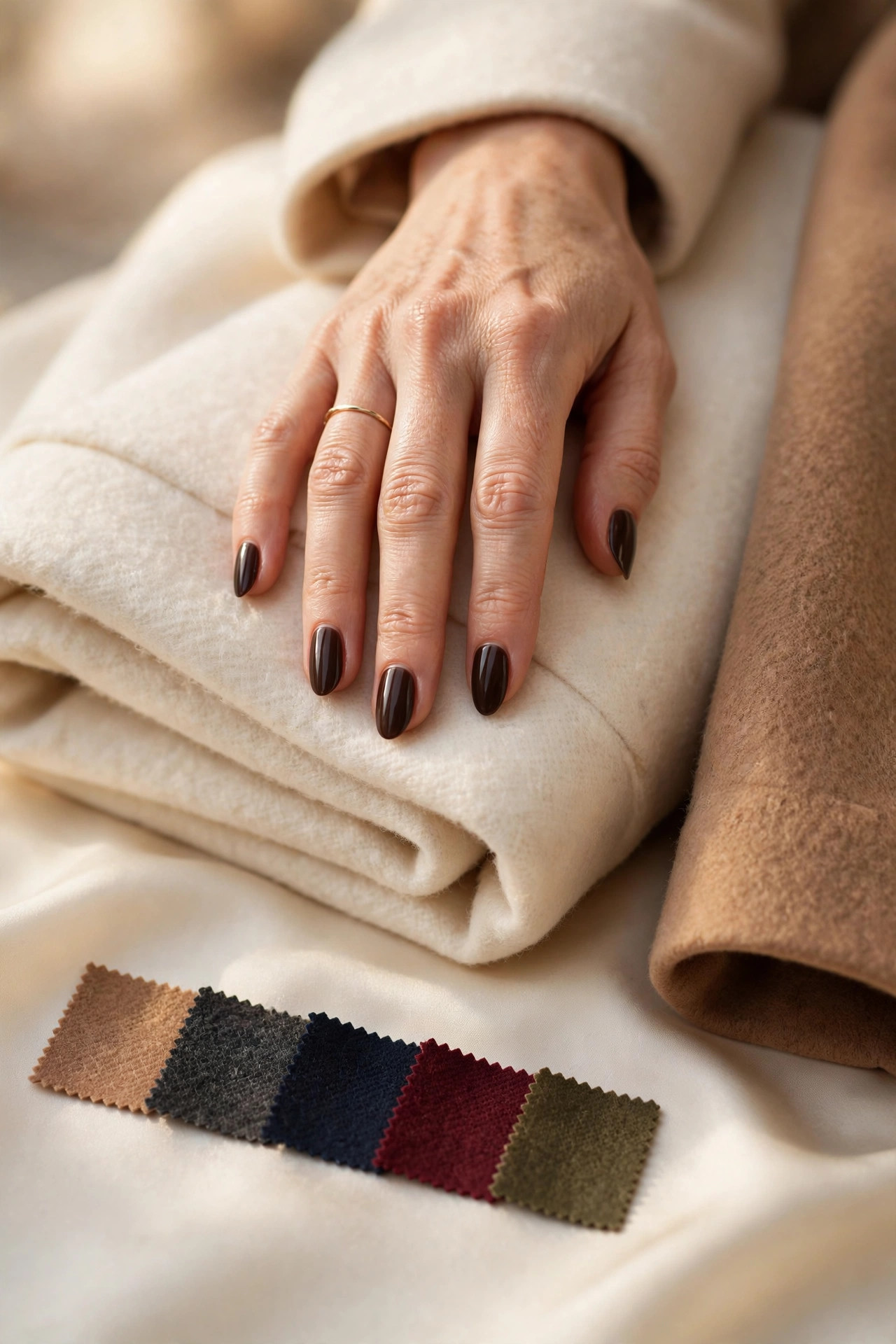
Deep espresso is the definitive answer — a dark, warm brown nail against camel wool looks expensive in the way only tonal dressing can. Espresso sits in the same warm family as camel but several shades deeper, so the contrast is soft rather than stark. Warm taupe-mauve is the daytime alternative: lighter, quieter, and particularly flattering on fair to medium skin. Burnt caramel, worn on shorter almond or oval nails, gives the pairing a seventies, suede-and-silk feeling that suits the camel coat’s heritage character.

The pairing works because camel is a warm neutral with yellow-beige undertones, and warm browns share that DNA. A cool nail color here — a blue-based red, a gray mauve — would sit on the hand like an unrelated accessory. Glossy crème is the finish to choose: the shine mirrors the soft sheen of good wool and keeps dark brown from reading flat. Keep the shape refined — medium almond or a neat oval — because the camel coat is a classic, and it asks for polish in every sense. Gold jewelry is the natural partner; camel’s warmth and yellow gold are old friends, and a slim band or small hoop keeps the composition from tipping into excess.
What nail color goes with a black coat in winter?
Oxblood is the classic answer, and it earns the title every winter. A deep, wine-dark red against black wool is the closest thing to a guaranteed pairing in this guide: the red reads as an extension of the coat’s depth rather than a competing color. Scarlet is the bolder route — true, bright red pops against black with cinematic contrast, best saved for evenings when you want the manicure to be noticed. Black-cherry, a near-black plum that reveals its red in daylight, is the insider choice for anyone who finds oxblood too expected.

Black is the one coat that can absorb almost any nail color, which is precisely why the choice matters: with no undertone to echo, the manicure becomes the statement. A high-shine crème finish is essential — matte dark reds against black wool can look chalky and tired by February, while gloss keeps the color saturated. Gold jewelry is the classic companion here; the warmth of gold against black-and-oxblood is the palette of a well-dressed evening, and a thin bangle at the wrist ties the hand to the coat. For formal winter nights, this is also the coat to wear with the dressier nail-and-outfit pairings in our holiday styling guide.
What nail color goes with a cream or ivory coat?
Milky nude is the answer that never fails — a sheer, milky beige-pink that lets the natural nail show through reads as an extension of the coat itself. Warm blush is the slightly more romantic version, adding a whisper of pink that keeps the look from washing out. Soft greige — gray-beige — is the modern choice, and it suits medium and deep skin tones particularly well, where a pale nude can disappear. What you want is tonality: nails that sit in the same pale, warm family as the coat, so the hand looks like it belongs to the outfit rather than interrupting it.
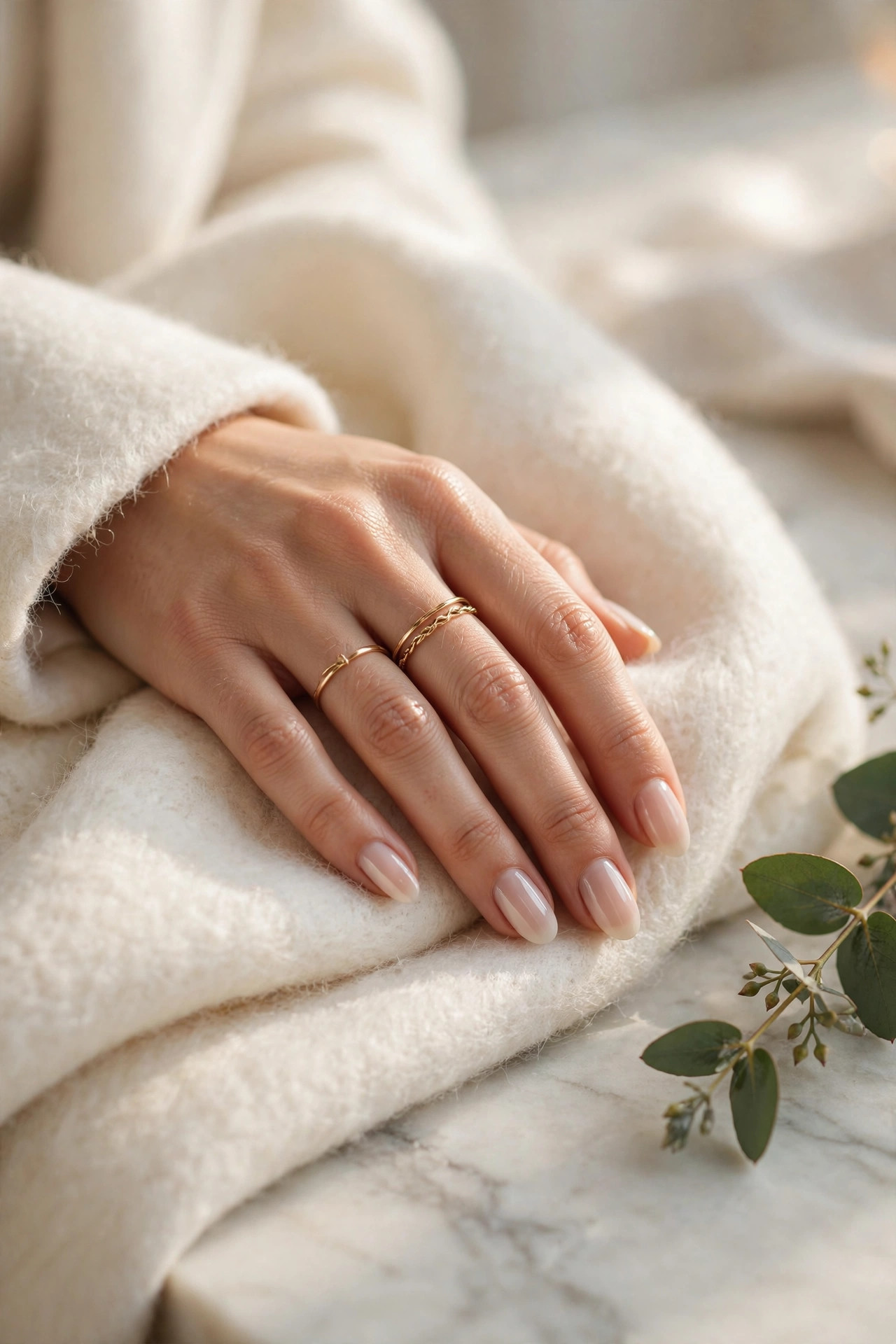
The caution with cream coats is contrast: a dark nail against ivory wool can look striking in a photograph and harsh in daylight, because there is nowhere for the eye to rest between the two extremes. If you want depth, reach for the greige rather than the espresso. Glossy is the only finish that makes sense here — a matte nude against cream wool reads as unfinished, while gloss gives the pale shades the dimension they need. This is also the coat where gold jewelry does its heaviest lifting: cream and gold together are the palette of winter mornings, and a couple of fine layered rings keep a pale manicure from looking bare. Sheer and milky finishes are covered in more depth in our nail-to-outfit matching guide, which treats translucency as its own pairing tool.
Can I wear pink nails with a navy coat?
Yes — blush pink is one of the prettiest things you can do with navy. A soft, warm pink against deep blue creates the kind of contrast that feels intentional: the cool depth of the coat makes the pink look warmer and more deliberate by comparison. Classic red is the bolder alternative and a genuine heritage pairing — think Breton stripes, navy blazers, red lips. Silver-white, meaning a pale metallic or a pearly sheer, is the evening option: it picks up the cool tones in navy and reads as frost against the dark wool.

Navy is a cool color, so the logic here is contrast rather than echo. Blush pink works because warm pink and cool navy are complementary in the everyday sense: each makes the other look richer. What to avoid is anything muddy — grayish mauves and brownish nudes lose their definition against navy and can make hands look sallow. Keep the finish glossy and the shape neat; navy is a tailored color and it rewards precision. Jewelry is where navy breaks from the rest of this guide: silver is the better metal here. Cool silver against cool navy is seamless, while gold can look like it wandered in from another outfit. A fine silver bracelet or a pair of simple silver studs completes the pairing without competing with it.
What nail color goes with a charcoal or gray coat?
Cherry red is the standout choice — a vivid, blue-based red against charcoal gray is one of winter’s great high-contrast pairings, sharp and unmistakably chic. Champagne nude is the quiet alternative: a warm, luminous neutral that softens gray’s severity without disappearing into it. Soft plum sits between the two, a duskier option for anyone who loves dark nails but wants something more interesting than black. Gray is the most forgiving coat color in the wardrobe, which means the manicure gets to set the mood: red for energy, nude for calm, plum for mystery.

Charcoal is a true neutral with no strong undertone, so both warm and cool nail shades sit comfortably against it. The decision is really about the impression you want to leave. Cherry red in a glossy crème is the power move — it is also the shade that photographs best against gray, if your winter involves any events worth remembering. Champagne nude suits the office and the everyday, and a subtle shimmer finish can lift it after dark. Jewelry is a free choice with charcoal: silver keeps the look cool and architectural, gold warms it up. This is the coat to experiment with, because gray forgives almost everything except a dull finish — keep the top coat fresh, since chips show mercilessly against dark wool.
What nail color goes with a burgundy coat?
Golden nude is the most flattering answer — a warm, honeyed neutral that sits beside burgundy without competing with it. Espresso is the deeper alternative, a dark warm brown that echoes the coat’s richness tone-on-tone. A champagne shimmer accent — one nail, or a sheer shimmer over the nude — is the festive option, and it is particularly at home from late November through the holidays. The principle with a burgundy coat is restraint: the coat is already the richest color in the room, so the nails should support it rather than audition alongside it.

Wearing red nails with a burgundy coat is the pairing to think twice about. It can work — a deep oxblood nail against a brighter burgundy coat has a tonal logic — but two reds that are close without matching will always look like a mistake rather than a choice. Golden nude sidesteps the problem entirely, and it has the added benefit of suiting the coat’s warm undertones. A glossy crème with one shimmer accent nail gives you the best of both worlds: polish for the daytime, a little light for the evening. Gold jewelry is non-negotiable here — burgundy and gold is a combination with centuries of precedent, and layered gold rings against the coat read as pure winter luxury. For holiday dressing, our Thanksgiving nail and outfit pairings explore this palette in full seasonal dress.
What nail color goes with an olive coat?
Terracotta is the pairing that feels most natural — a warm, earthy orange-brown that shares olive’s autumnal character while standing clearly apart from it. Warm bronze-nude is the subtler version, a metallic-leaning neutral that catches light without shouting. Deep chocolate is the evening answer, dark and warm enough to hold its own against olive’s depth. Olive is a green with warm, yellow-brown undertones, and it rewards nails drawn from the same earthy family: think clay, bronze, bark, and amber rather than anything cool or pastel.

The mistake with olive is reaching for cool tones: a blue-red or an icy pink will sit against the green like a wrong note, because olive’s warmth and those shades’ coolness pull in opposite directions. Terracotta avoids this completely — it is olive’s warm-weather cousin, and together they read as a considered autumn-winter story. A glossy crème finish keeps the earthy shades looking intentional rather than rustic; the shine is what separates a style choice from a gardening accident. Gold jewelry, especially in warmer tones like champagne gold, completes the palette — a gold watch against an olive cuff is one of winter’s quiet luxuries.
How should I style nails for work, evenings, and weekends?
The coat stays the same; the occasion changes what the nails are allowed to say. The trick is adjusting depth and finish rather than reinventing your manicure every Friday — a shade that works for the office can usually be dressed up or down with small changes.
What nail colors work best for the office in winter?
For work, choose the quietest version of your coat’s pairing: milky nude with cream, warm taupe-mauve with camel, blush pink with navy, champagne nude with charcoal, golden nude with burgundy, bronze-nude with olive. Keep nails short to medium, the finish glossy but not glittery, and the shape a neat oval or soft square. The office test is simple: your manicure should be noticed only when someone looks for it. Our office nail color capsule builds a full workweek rotation around exactly this principle, if you want a ready-made system.
What nail colors suit winter evenings out?
Evenings are when you reach for the bolder end of each pairing: oxblood or scarlet with black, cherry red with charcoal, classic red with navy, espresso with camel or burgundy. This is also when finish earns its keep — a fresh glossy top coat, or one champagne shimmer accent nail with burgundy or camel, reads as dressed-up without a full manicure change. If your evening involves a dark restaurant or a late train home, deeper shades photograph better and show less wear. Keep one “evening upgrade” in your bag: a shimmer topper you can sweep over your daytime nude turns golden nude into party-ready in thirty seconds.
What about weekends and casual winter days?
Weekends are for the earthy, relaxed end of the spectrum: terracotta with olive, burnt caramel with camel, soft greige with cream, black-cherry with black. Shorter nails and simpler shapes suit gloves, tote bags, and market runs — a medium almond that looked refined at dinner can feel impractical hauling firewood or wrangling a stroller. Matte finishes are acceptable on weekends if you love them, though a satin or soft-gloss top coat still looks more finished. This is also the moment for the pairings you’d never wear to a board meeting: terracotta with a cream coat, cherry red with navy — weekends forgive experimentation.
Should I wear gold or silver jewelry with my coat and nails?
Match your metal to the coat’s temperature, not to the nail color. Warm coats — camel, burgundy, olive, cream — take gold: yellow or champagne gold deepens the warmth and ties the whole composition together. Cool coats — navy, charcoal — take silver, which keeps the look crisp and seamless. Black and charcoal are the exceptions that take either, so let the nail shade decide: oxblood and cherry red lean gold, blush pink and silver-white lean silver.
The reason metal matters more than most people think is placement. Your rings and bracelets sit directly beside your nails, so the metal becomes part of the manicure’s frame — a gold band next to espresso nails on a camel coat reads as one warm composition, while silver in the same spot would introduce a cool note with nothing to answer it. When you mix metals deliberately, keep one dominant: a silver watch with otherwise gold jewelry still works if the gold is clearly the theme. For a deeper treatment of how metals interact with polish colors, our guide to coordinating nails with jewelry metals and colors walks through the combinations piece by piece.
One practical note: the metal of your coat’s hardware counts. A camel coat with gold buttons has already chosen your metal for you — echo it in your jewelry and the whole outfit clicks. A navy coat with silver zips asks for the same loyalty. When hardware and jewelry disagree, the eye notices, even if the mind doesn’t.
How do I make one manicure work with several winter coats?
Choose a shade from the overlap. Espresso flatters camel, burgundy, and olive. Oxblood suits black, burgundy, and charcoal. Milky nude works with cream, navy, and charcoal. These bridge shades exist because most winter coats draw from the same deep, warm-leaning palette, and a well-chosen neutral can move between them without a second appointment.
The practical system is a two-manicure rotation: one deep shade and one nude, alternated every two to three weeks through the season. Deep espresso for the weeks you live in camel and burgundy; milky nude for the cream-and-navy weeks. Keep the shape consistent — medium almond suits every coat on this list — and the finish glossy, and no one will ever guess you’re running a capsule wardrobe on your fingertips. It is the lowest-effort version of everything this guide recommends, and honestly, it is what most well-dressed women are already doing.
Your coat does the talking all winter. The right nail color simply makes sure it says what you mean — warm with warm, bold with black, delicate with cream, and gold where the coat runs warm. Pick your pairing from the table, check it against your jewelry, and the rest of the season takes care of itself.