

Some manicures are painted on. Glass nails are poured on — at least, that is the illusion. Sheer, syrupy color layered over the nail until it catches light the way a tinted window catches the afternoon sun. This winter, the clearest shine in the room is coming from Seoul.
TL;DR — Glass nails in 30 seconds
- What they are: a translucent, ultra-glossy manicure — sheer jelly color layered over the nail and sealed under a wet-look top coat, so light passes through the color.
- The winter 2026 palette: sheer nude, blush pink, icy blue, amber, deep cherry, and clear with an iridescent whisper.
- Not glazed donut: glazed donut uses chrome powder over opaque color; glass nails use translucent layers with no metallic shimmer.
- At the salon, say: “sheer jelly color, built up in translucent layers, finished with a high-gloss top coat — no chrome powder.”
- At home: a sheer polish plus two or three thin jelly layers and a glossy top coat gives a convincing approximation.
Definition — glass nails: a manicure finish in which sheer, translucent color is layered over the natural nail (or a clear base) and sealed under a high-gloss top coat. Light travels through the color and reflects back, so the nail reads as tinted glass rather than painted nail.
What are glass nails, exactly?
Glass nails are a sheer, high-shine manicure finish in which translucent jelly color is layered over the nail and sealed under a glossy top coat, so light travels through the color and bounces back — the nail looks like tinted glass. The look grew out of Korean nail salons, where syrupy “jelly” textures and a wet, just-poured shine have been a house signature for years.
If you have spent any time looking at Korean nail portfolios — the ones with immaculate cuticles and lighting that makes every nail look backlit — you have seen glass nails, even if nobody called them that. The technique is less a single design than a finish philosophy: keep the color translucent, keep the surface mirror-smooth, and let light do the decorating.
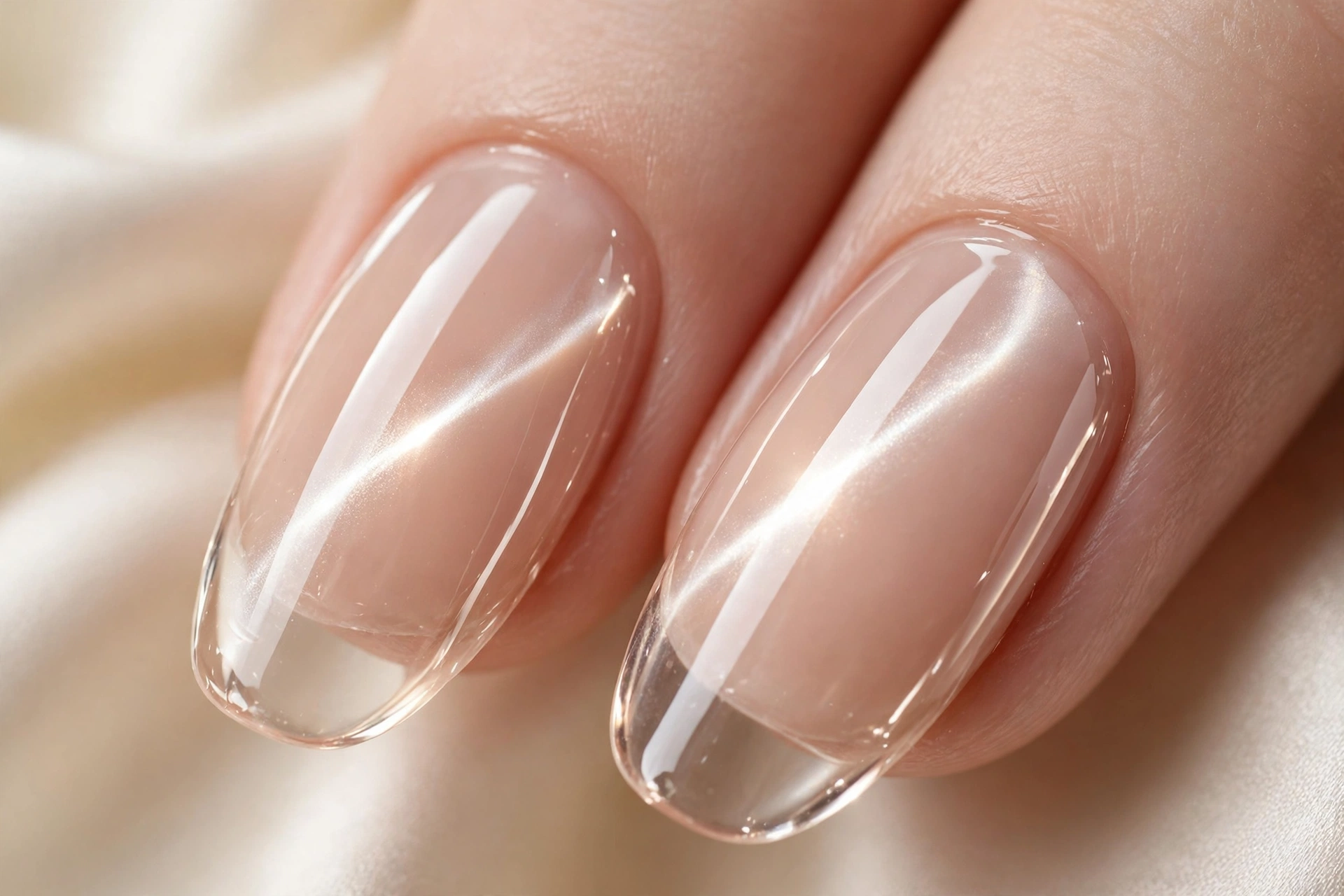
Three things have to be true for the effect to read as “glass.” First, translucency — you should be able to sense the nail underneath the color, the way you sense water beneath the surface of a tinted swimming pool. Second, syrupy color — the shades behave like fruit syrup or stained glass, deepening where the layers overlap rather than covering in one opaque stroke. Third, a wet gloss — the top coat needs to look freshly poured, with a highlight that moves when the hand turns.
Why winter 2026? Korean nail artists and editorial salons have been showcasing this finish heavily through the colder months, and the logic is seasonal: winter light is low and directional, and a translucent manicure drinks it in. Where summer nails shout in opaque brights, glass nails catch candlelight, street lamps, and that pale December sun and throw it back. It is a quiet-luxury manicure — expensive-looking without a single rhinestone.
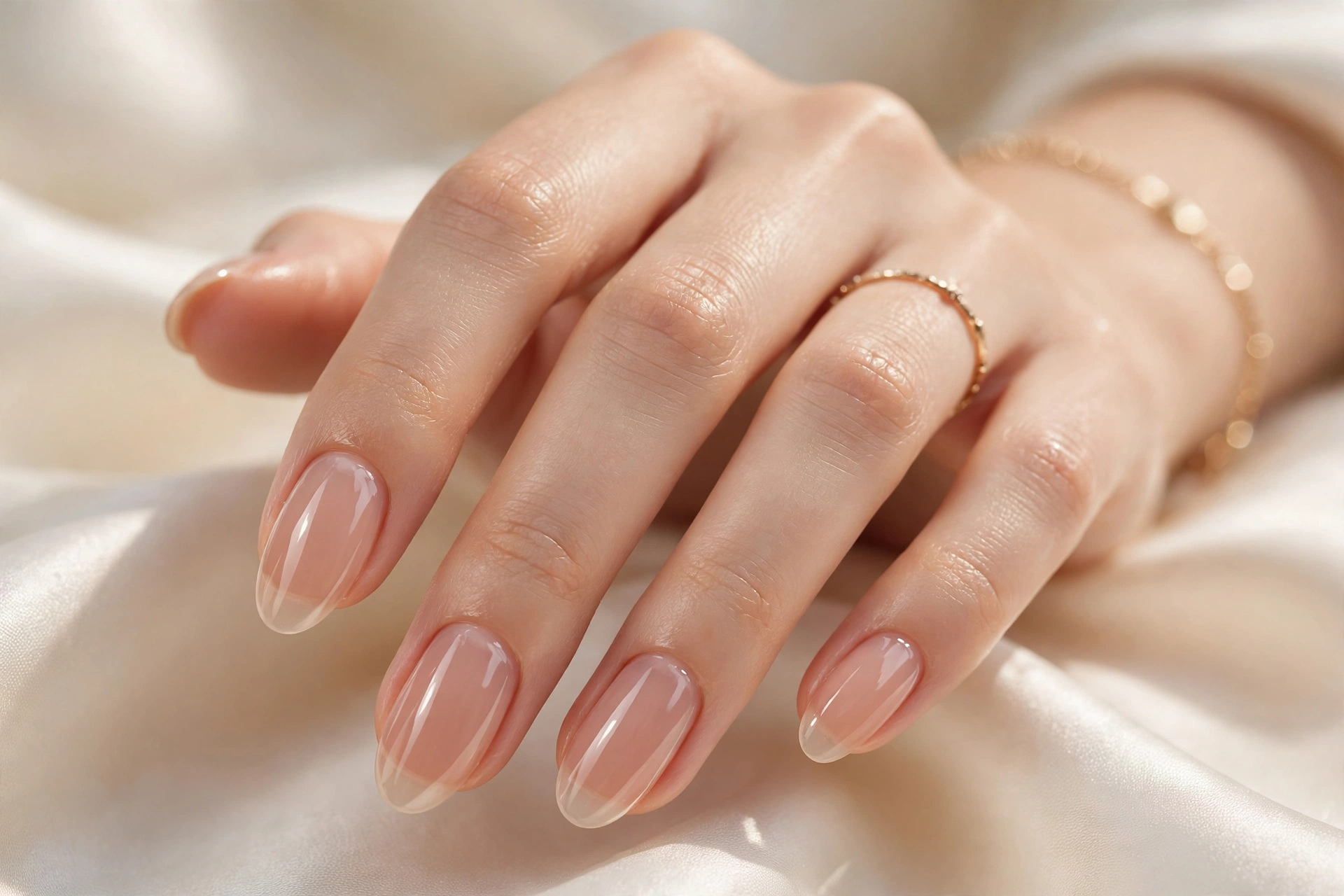
How is the glass effect actually created?
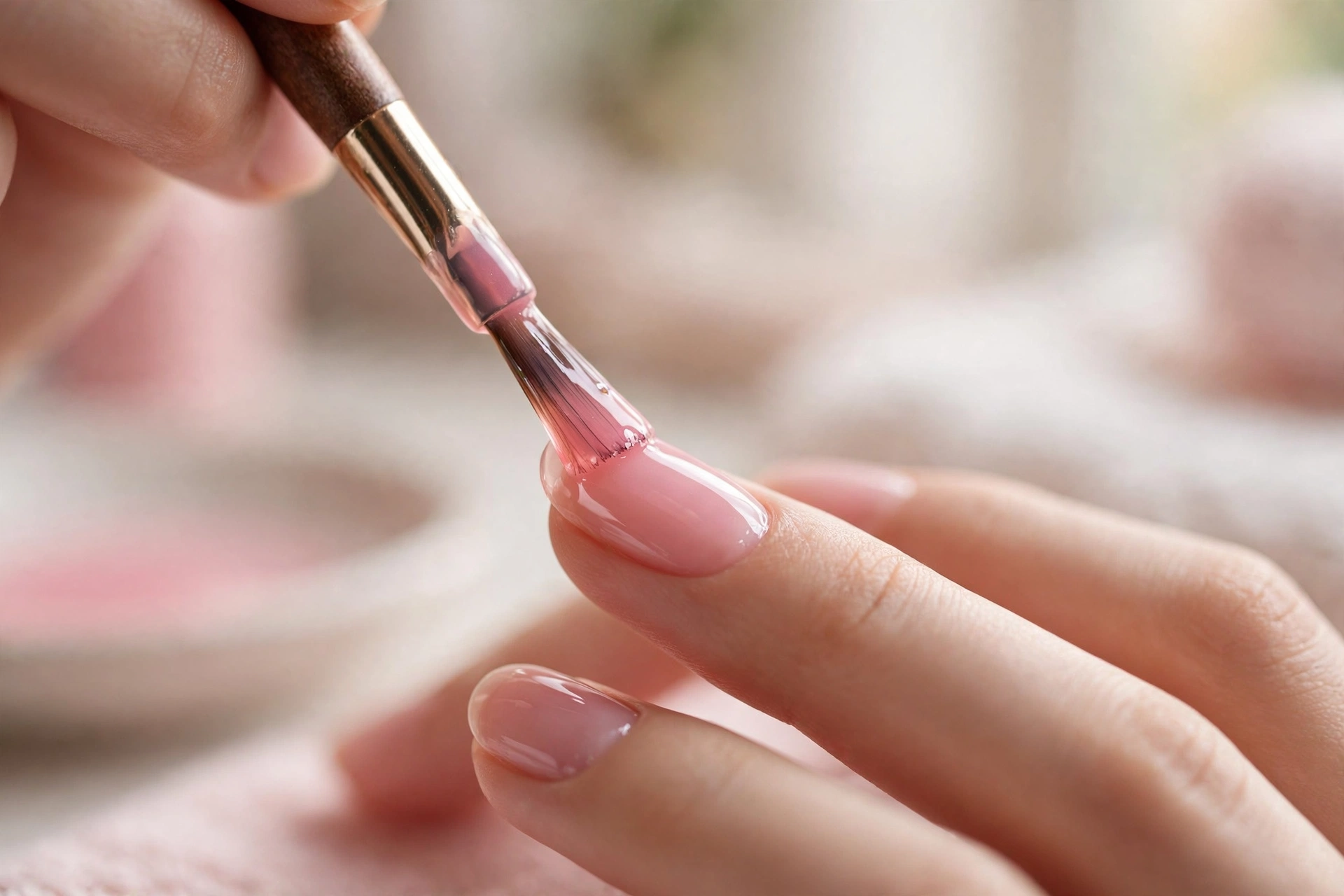
The honest answer is layers — thin, patient ones. At a salon, a nail technician typically starts with a clear or barely-tinted base, then builds the color in two to four translucent passes. Each pass deepens the tint without ever turning opaque. The free edge of the nail often ends up slightly deeper in color than the cuticle area, simply because the layers overlap there — that natural gradient is part of the charm and the reason the finish looks dimensional rather than flat.
The top coat matters as much as the color. A true glass finish needs a glossy, self-leveling top coat applied generously enough to create a domed, liquid surface. This is where salon gel has an advantage: gel top coats cure to a hard, glassy shell that regular polish struggles to match. That does not mean regular polish cannot play — the at-home section below covers the approximation — but the deepest, wettest version of this look lives in the gel world.
Shape plays a supporting role. Almond and oval shapes flatter the finish because their curved surfaces bend light across the nail, amplifying the glassy read. That said, the finish is forgiving: because the color is sheer, regrowth is less visible, chips are less obvious, and the look stays elegant as it grows out — a practical bonus nobody talks about enough.
How do glass nails differ from glazed donut nails?
Glass nails and glazed donut nails are often confused, but they are built differently: glazed donut nails use chrome powder rubbed over an opaque base color to create a pearly, metallic shimmer, while glass nails use translucent jelly layers with no chrome at all — the shine comes from light passing through clear color, not from metallic reflection. Think stained glass versus a pearl.
The distinction matters when you sit in the salon chair, because asking for one and receiving the other is an easy mix-up. Here is how the four closely related finishes compare:
| Finish | How the shine is made | What the color looks like | Best for |
|---|---|---|---|
| Glass nails | Light passing through translucent layers + glossy top coat | Sheer, syrupy, tinted-glass depth | Quiet luxury; winter light; minimalists who want dimension |
| Glazed donut nails | Chrome powder over an opaque base | Milky with a pearly, iridescent shimmer | Soft glam; bridal; the Hailey Bieber devotee |
| Jelly nails | Translucent color, standard gloss | See-through candy color, playful and flat | Fun color payoff; summer brights; nail-art bases |
| Chrome glaze | Mirror chrome pigment, fully reflective | Opaque with a liquid-metal mirror finish | Maximum impact; evenings out; statement manicures |
Jelly nails deserve a special note because they are glass nails’ closest relative. Jelly is the texture — translucent, candy-like color. Glass is jelly plus the wet, light-catching finish, usually in a more restrained palette. If you love jelly nails but find the brights too playful for December, glass is your winter translation of the same idea. And if you are curious about the mirror end of the spectrum, our guide to chrome nails at home covers the reflective family properly.
6 glass-nail looks to wear this winter
The finish is the star, but the color you pour into it sets the mood. These six are the shades Korean salons return to most through winter — each one a different personality of the same technique.
1. Sheer Nude Glass

The entry point and, frankly, the one you will wear longest. A nude-tinted jelly — think warm beige with a drop of rose — layered sheer over a medium almond shape. It reads as immaculate natural nails with impossible shine, the manicure equivalent of a silk slip dress. Suits every skin tone because the translucency lets your own nail bed show through; the shade adapts to you rather than the other way around. Difficulty: low. This is also the most office-proof and occasion-proof choice on the list.
2. Blush Pink Glass
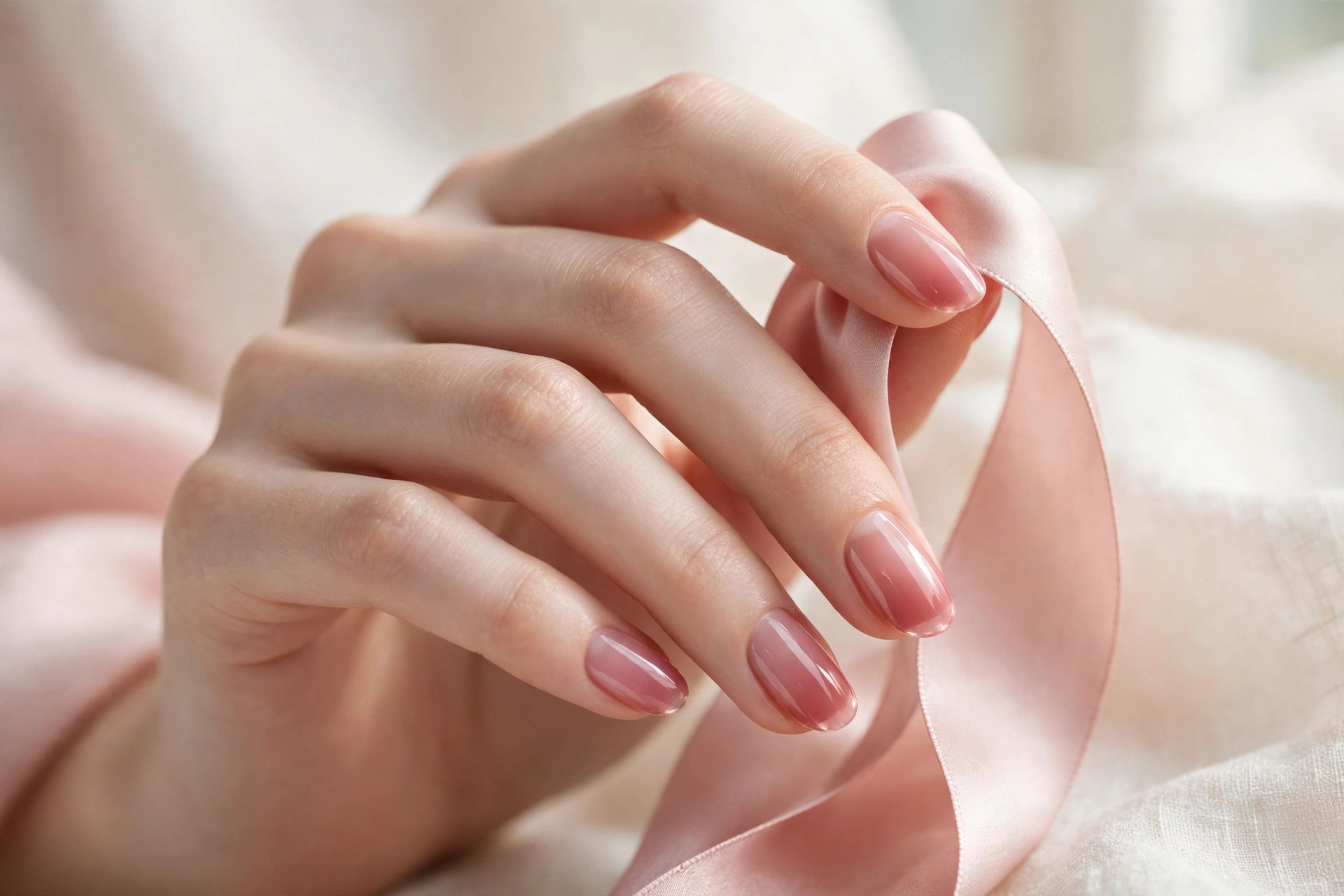
Blush is nude’s softer-spoken sister: a sheer rose-pink jelly that deepens toward the free edge. On an oval or squoval shape at a medium length, it has a just-pinched, healthy glow — the nail equivalent of a cream blush. It pairs beautifully with gold jewelry, cashmere knits, and the holiday party dress you have been saving. Choose this when you want color that still whispers.
3. Icy Blue Glass

The most seasonal of the six. A pale, translucent blue — not opaque baby blue, but the color of ice over deep water — turns the glass finish literal: your nails look frozen. It is striking against dark winter coats and silver jewelry, and it photographs beautifully in daylight. Keep the shape almond or coffin and the length medium to long; short and square can make icy tones read chilly rather than chic. For more ways to wear the shade family, see our frost and icy blue winter designs.
4. Amber Glass
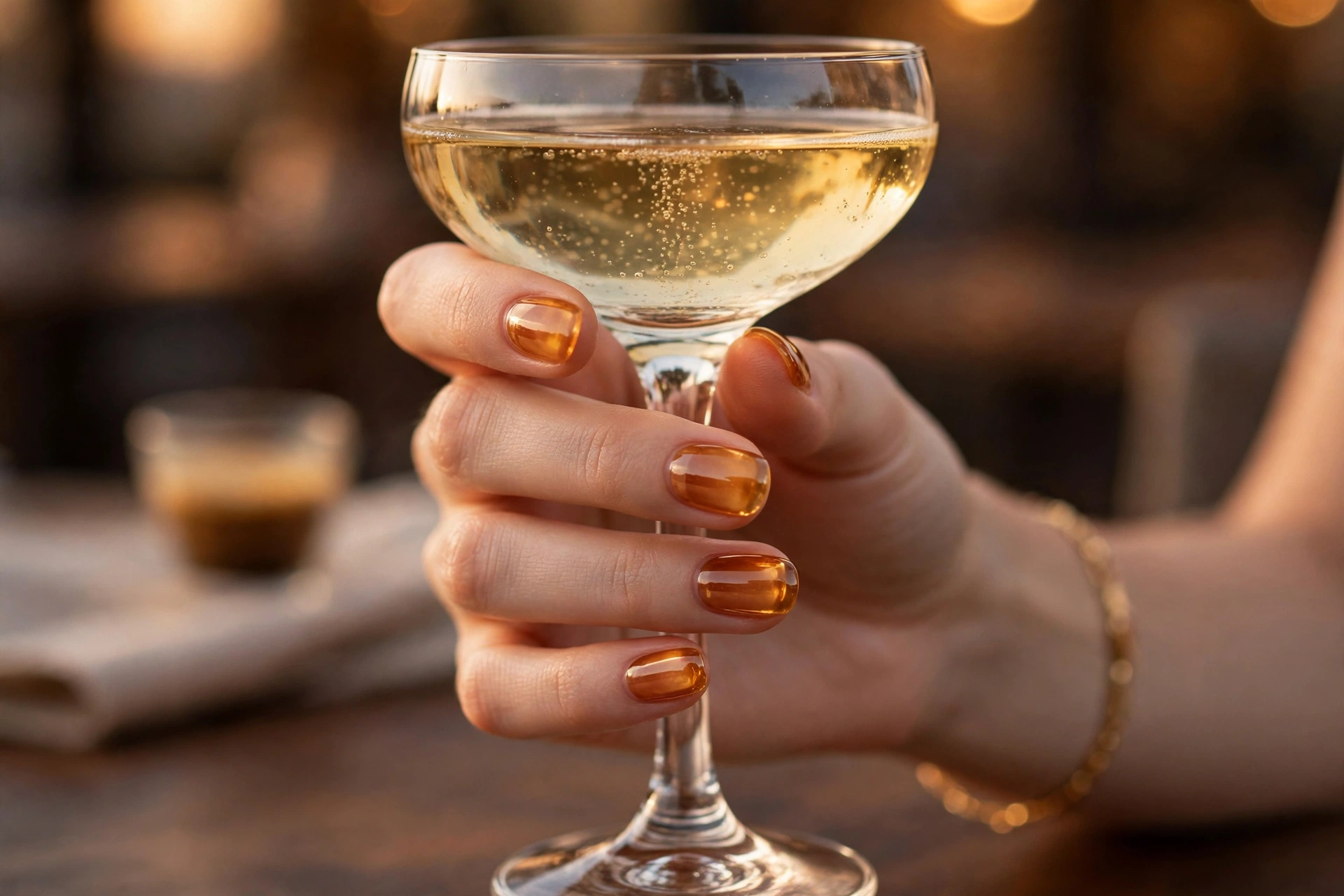
Amber is the bridge between autumn and winter: a warm honey-cognac jelly that glows like the inside of a whiskey glass held to the light. It flatters warm and deep skin tones especially well, and it does something lovely against espresso, camel, and burgundy wardrobe staples. Wear it oval and medium — the warm translucency looks richest with a little length to show off the depth.
5. Deep Cherry Glass
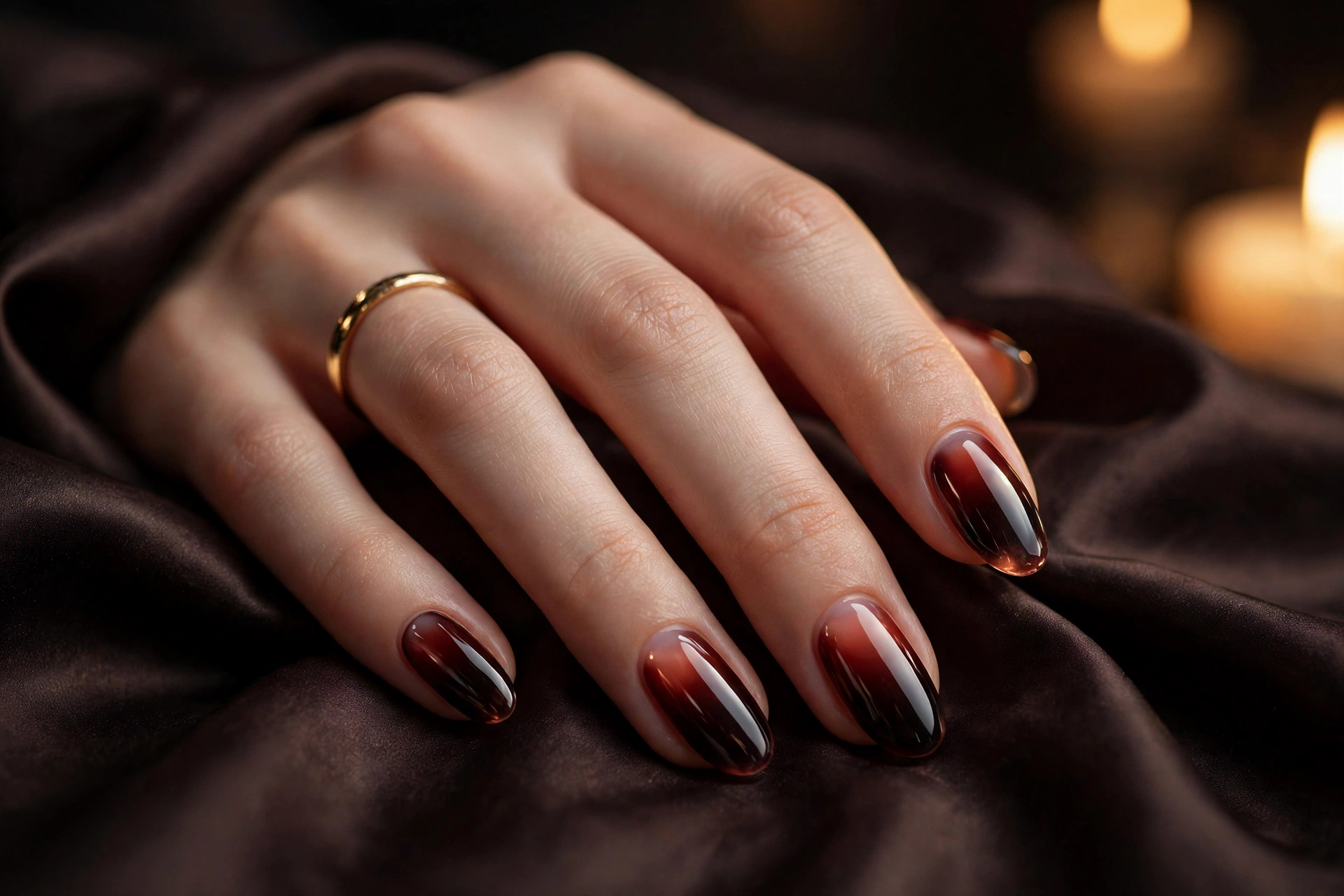
Cherry glass is what happens when the trend dresses up. A black-cherry jelly, built in three to four layers so the free edge goes nearly noir while the cuticle stays luminous, gives you the drama of a dark manicure without the heaviness of opaque polish. This is the holiday-party nail: it catches candlelight like stained glass in a cathedral. Almond shape, medium to long. Expect compliments from strangers.
6. Clear Iridescent Glass
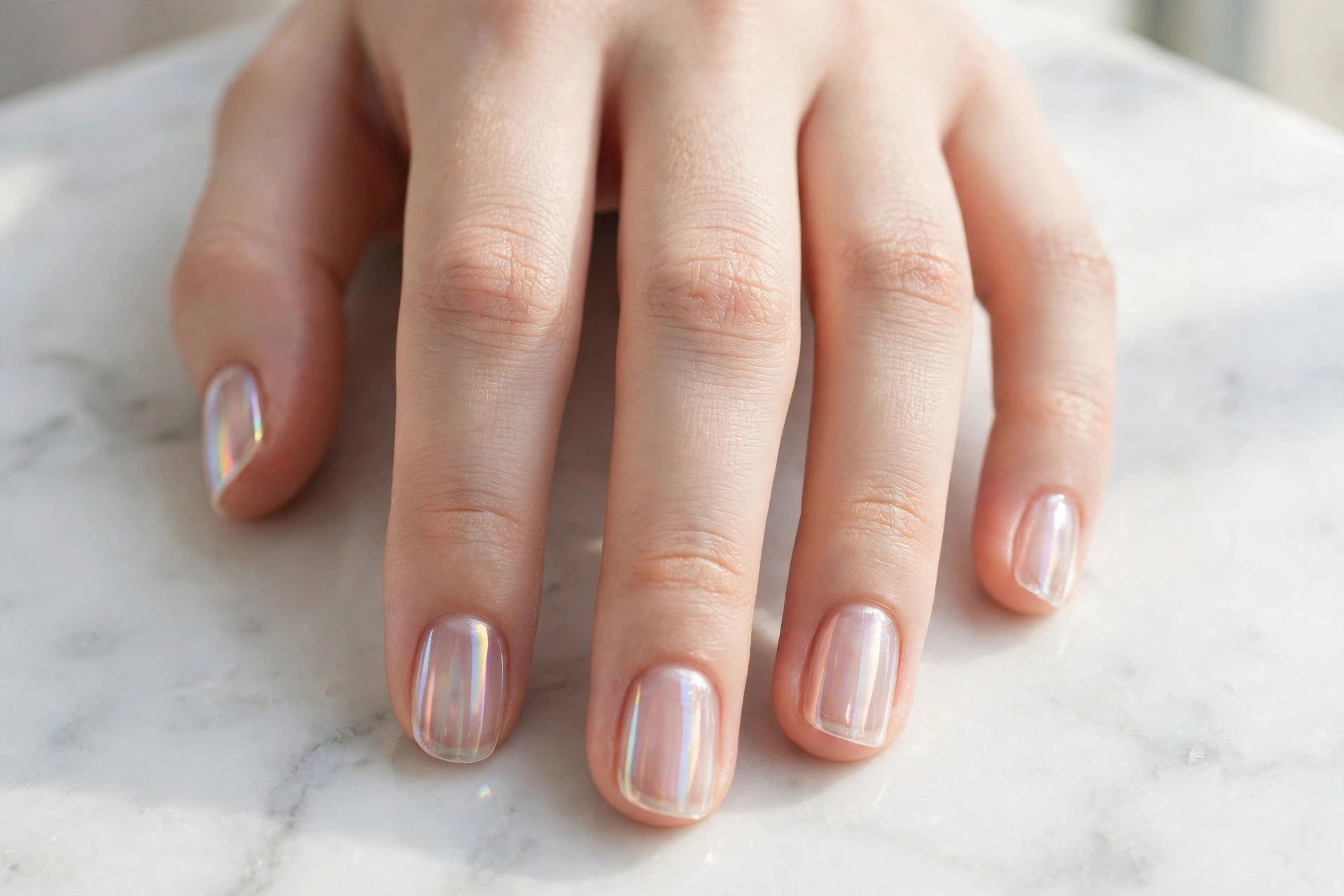
No tint at all — just perfectly clear layers with the faintest iridescent whisper, like the surface of a soap bubble. This is the minimalist’s glass nail: it looks like you have the healthiest, glossiest natural nails imaginable, until the light hits and a hint of rainbow moves across them. It works on short nails better than any other look here, suits strict dress codes, and is the easiest to maintain. If you have never worn nail color to the office, start here.
Who do glass nails suit?
Glass nails suit almost everyone, because sheerness is forgiving: the translucent color adapts to your natural nail bed, short nails carry the finish as well as long ones, and the restrained palette works across skin tones and dress codes. That is the practical beauty of the trend — it asks very little of you.
A few honest notes. If your nails are very short, lean toward the clear iridescent or sheer nude versions; the darker cherries and ambers need a little length to show their depth. If your nail beds are wide, almond or oval shaping will make the glass read more elegant. And if your style runs maximalist — heavy nail art, 3D charms — glass nails can still work as a base: the translucent layers make a beautiful ground for minimal line art or a single delicate decal, though purists will tell you to let the shine speak alone.
What should I ask for at the salon?
At the salon, ask for “sheer jelly color built up in translucent layers, finished with a high-gloss top coat — no chrome powder.” Bring reference photos; this is a finish that words alone can blur, and a photo prevents the glazed-donut mix-up described above.
A good script sounds like this: “I want the Korean glass-nail finish — translucent jelly color, two or three thin layers so you can still see the nail underneath, and the glossiest top coat you have. No chrome, no shimmer powder.” Then name your shade family: nude, blush, icy blue, amber, cherry, or clear. Ask which jelly shades the salon stocks before you commit to a specific tone — not every salon carries true sheers, and a regular sheer polish layered patiently can substitute.
Two things worth clarifying before the first brushstroke: whether they will use gel or regular polish (gel gives the deeper, wetter glass; regular polish gives a softer version with easier removal), and the shape — ask for almond or oval unless your nail beds strongly suit something else. Pricing varies by salon and region, so treat any number you see online as a rumor; call ahead if budget matters.

Can I get glass nails at home?
Yes — as an approximation. With a sheer or jelly-finish polish, two to three thin translucent layers, and a high-gloss top coat, you can get convincingly close to the salon look using regular polish. It will not have quite the liquid depth of gel, but on the hand, in normal light, the effect reads beautifully.
You will need: a clear base coat, one sheer or jelly polish in your chosen shade (true jellies are labeled “jelly,” “syrup,” or “sheer tint”), and the glossiest top coat you own. Patience is the actual tool here — the layers must be thin. A thick coat of sheer polish goes cloudy; three whisper-thin coats go glassy.
The routine: prep nails as usual and apply base coat. Brush on the first sheer layer — thin enough that the nail shows clearly through it — and let it dry fully. Add a second thin layer, and a third only if the color still looks watery. The free edge will naturally deepen where layers overlap; let it, that gradient is the signature. Finish with a generous, smooth layer of glossy top coat, capping the free edge. Reapply top coat every two to three days to keep the wet look alive.
Keep expectations honest: regular polish cannot match gel’s domed, hardened shell, and the finish will wear like a normal manicure — a few good days, then maintenance. Do not peel or pick at the layers; soak off or remove gently, and give nails a rest with cuticle oil between manicures.
What are the best alternatives if glass isn’t your finish?
Not every shine is for every person, and the glass family has close cousins worth knowing. If you love the translucency but want more playfulness, jelly nails in brighter candy shades give you the same see-through texture with a bolder attitude. If you want the glow with a pearly, bridal softness, glazed donut nails — chrome powder over milky color — are the famous alternative. And if what you actually crave is maximum reflection, chrome glaze delivers a true liquid-mirror finish; our chrome nails guide walks through that world.
For the season as a whole, glass nails sit comfortably inside the broader winter nail trends story: shine is up, opaque matte is down, and light-catching finishes are doing the heavy lifting across every shade family.
How do I make glass nails last?
Treat them like the glossy investment they are: cuticle oil daily, gloves for dishes and cleaning, a fresh layer of top coat every few days, and never use your nails as tools. The enemies of glass are dullness and chips — both show more on a high-shine finish than on a matte one.
Because the color is sheer, regrowth is graceful — the line where new nail appears is far less visible than with opaque polish, which is one of the finish’s quiet practical wins. Gel versions typically wear well for two to three weeks with proper care; regular-polish versions behave like any careful manicure, roughly a week with top-coat refreshes. When the gloss starts to fade, that fresh top-coat layer usually brings the glass right back.
Your glass-nails questions, answered
Are glass nails the same as jelly nails?
Not quite. Jelly nails are the texture — translucent, candy-like color, often in bright playful shades. Glass nails use that same jelly translucency but finish it to a deeper, wetter, light-catching gloss, usually in a restrained winter palette. Think of glass as jelly’s elegant older sister: same sheer DNA, more refined presentation.
Do glass nails work on short nails?
Yes — better than most trend finishes. Because the color is sheer rather than opaque, short nails don’t look overwhelmed, and the gloss makes even a short nail look groomed and deliberate. The clear iridescent and sheer nude versions are the most flattering on short lengths; save deep cherry and amber for when you have a little more length to show the depth.
How long do glass nails last?
It depends on the medium. Salon gel glass nails typically last two to three weeks with daily cuticle oil and a little care. A regular-polish at-home version lasts about a week — refresh the glossy top coat every two to three days to keep the wet look alive. The sheer color hides regrowth gracefully, so the grow-out phase looks better than with opaque polish.
Can I do glass nails with regular polish?
Yes, as a convincing approximation. Use a sheer or jelly-finish polish in thin layers — two to three coats, letting each dry — then seal with a high-gloss top coat. The result won’t have gel’s liquid depth, but the translucent shine reads clearly. Look for polishes labeled jelly, syrup, or sheer tint, and keep every layer whisper-thin to avoid cloudiness.
What nail shape is best for glass nails?
Almond and oval shapes flatter the finish most, because their curved surfaces bend light across the nail and amplify the glassy effect. Squoval works well for the minimalist clear and nude versions. Very square, very long shapes can make the finish look stark — soften the corners if you want the full luminous effect.
Are glass nails still in style for winter 2026?
The finish continues to be showcased by Korean nail artists and editorial salons through the winter season, which is where the look originates. Trends move, but glass nails have the qualities of a lasting finish rather than a flash moment: it’s wearable, flattering across ages and styles, and easy to refresh in new shades. It’s a safe choice for the season.