
This winter, the most interesting manicures are no longer flat. Pearls, rhinestones, tiny gold charms, sculpted bows and caviar beads are being set directly onto the nail, turning a manicure into something closer to a jewelry box. The 3D embellishment wave is the season’s boldest answer to years of quiet, barely-there nails — and unlike many trend reports, this one comes with receipts. Below you’ll find what the trend actually is, what published trend coverage says about it, and 12 concrete ways to wear it, from a single pearl for the minimalist to a full charm cluster for party season.
Every look notes shape suitability, difficulty and why you’d choose it, plus honest guidance on salon versus DIY, durability and cost.
TL;DR
- 3D nail embellishments are any raised decorations set onto or into the nail — pearls, crystals, charms, 3D bows, caviar beads, sculpted florals, metallic hardware.
- The evidence: a web-based winter 2026 trends analysis names 3D decals, charms, pearls and metallic hardware in a “more-is-more” maximalist approach; a celebrity-focused 2026 roundup documents jewel-and-crystal manicures on Selena Gomez and Dua Lipa.
- Start small if unsure: a single pearl or a cuticle crystal line gives you the look with almost no commitment.
- Expect an upcharge for embellishment work at the salon; DIY flat-back crystals are the cheapest way in.
What counts as a 3D nail embellishment?
Definition: A 3D nail embellishment is any raised decorative element attached to the nail surface or set into the enhancement layer. It is distinct from flat nail art — painting, stamping, foils — because it has physical height you can feel with a fingertip.
That single definition covers a wide family. Stones — rhinestones, crystals, flat-backs — are the most common entry point. Pearls, whole or half-dome, read softer and more classic. Charms in gold or enamel (stars, moons, bows, initials) add personality. Sculpted elements like acrylic 3D flowers or bows are built by hand at the salon. Caviar beads give all-over texture, and metallic hardware — micro-studs, tiny chains, nail rings — pushes the look toward jewelry proper. The unifying idea: the nail becomes a setting, not just a canvas.
What’s the evidence that 3D nails are trending this winter?
Two published sources document the trend directly. A web-based analysis, “Trendy Winter Nail Designs for 2026” (accio.com), synthesizing coverage from Vogue, Elle, Glamour, Cosmopolitan and Allure, explicitly lists “Sculpted and 3D Elements”: 3D decals, charms, pearls and metallic hardware, “often in a ‘more-is-more’ maximalist approach.” Separately, NSI Australia’s “Winter Nail Trends 2026: Celebrity Inspired Styles” (published 2026-03-11, updated 2026-10-14) records the celebrity side — Selena Gomez’s crystal-and-jewel manicure and Dua Lipa’s chunky glitter — while also noting the minimalist counterpoint of a single tiny crystal at the cuticle.
A few honest caveats before the fun part. Neither source publishes save counts, search volumes or ranking data, so this article makes no claim that 3D nails are “the most saved” or “going viral” — what we can say is that multiple editorial trend roundups, built on fashion-press coverage, independently flag embellished, dimensional nails as a winter 2026 direction. Editorial interpretation, not source data: the split between maximalist sets and single-stone accents suggests this is a genuinely wearable trend rather than a runway-only one, which is exactly why we’ve organized the 12 looks below from quietest to loudest. For the wider seasonal picture, see our roundup of the wider winter trends we’re tracking.
12 three-dimensional looks to try this winter
Ordered from the most understated to the most unapologetic. Each look includes the shapes it flatters, the difficulty level and the reason to choose it.
1. The Cuticle Crystal Line
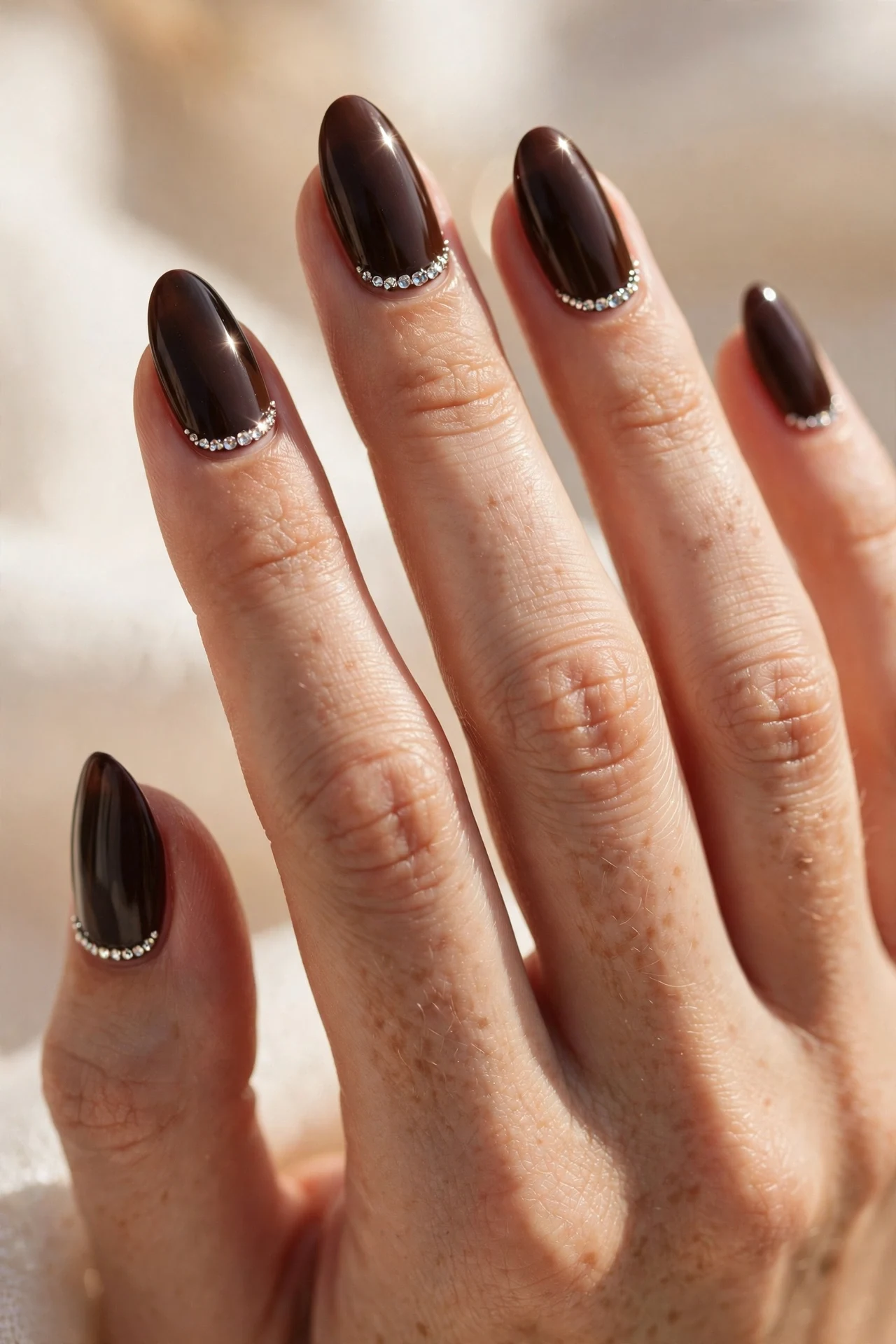
A single row of micro-rhinestones tracing the cuticle line on an otherwise plain manicure. It reads as jewelry from across the room and as “something interesting” up close. Shape: flatters almond and oval best, works on short squares too. Difficulty: easy to moderate at home with a wax pencil and gem gel. Why choose it: all of the sparkle, none of the snagging — stones sit low and rarely catch on knitwear, making this the most office-friendly 3D look of the twelve.
2. The Single Pearl

One lustrous pearl placed at the base of a single nail, everything else bare and glossy. On a sheer blush or Cloud Dancer-style milky base it looks bridal without trying. Shape: suits every shape and length, including very short nails. Difficulty: beginner — a half-dome pearl, a dot of nail glue, done. Why choose it: if maximalism scares you, this is the look that still counts. It photographs beautifully and survives real life: typing, cooking, gloves.
3. The Gold Charm Cluster
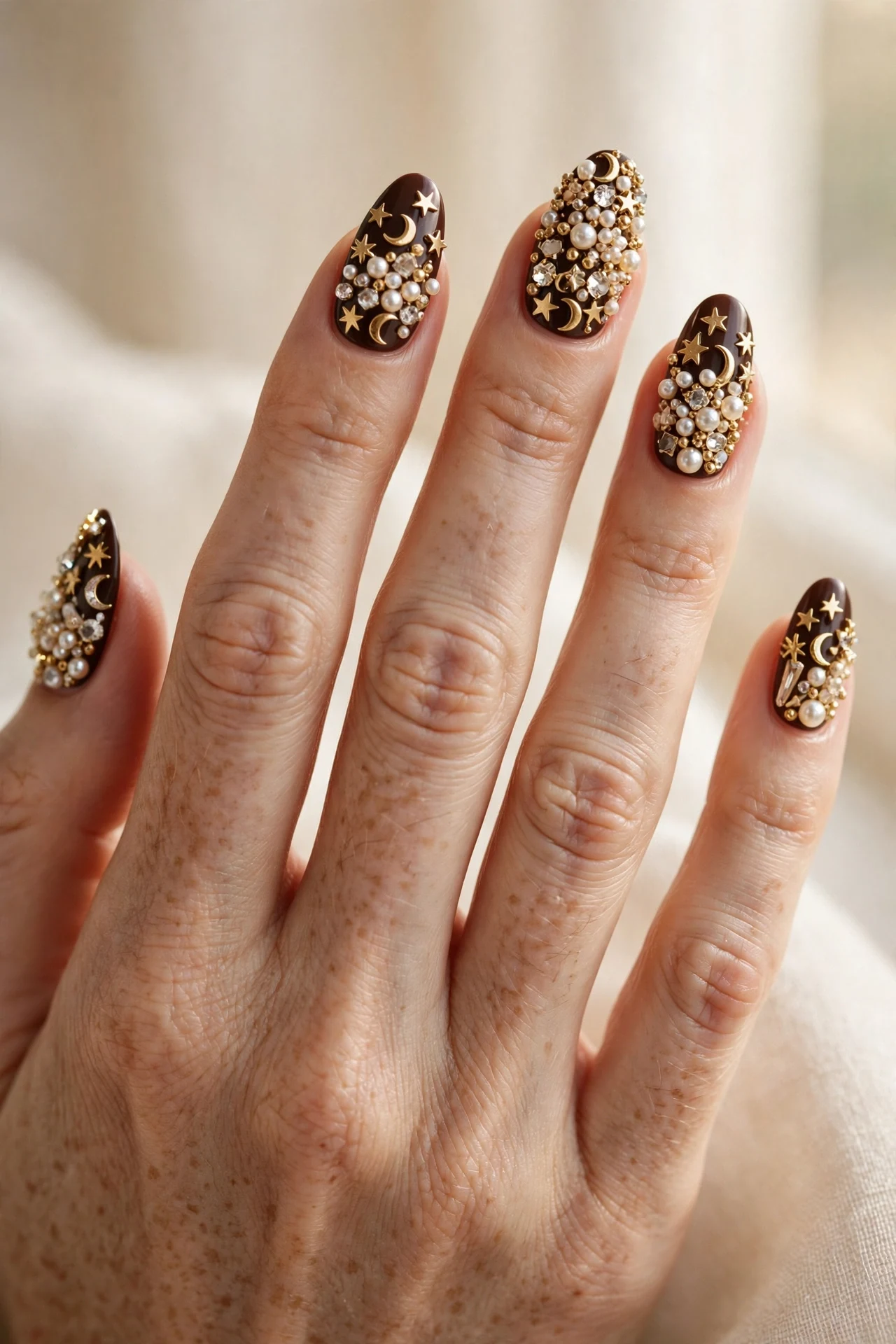
The “more-is-more” set the trend reports describe: tiny gold stars, moons, pearls and crystals scattered across a dark chocolate base. Shape: needs length — long almond or coffin gives charms room to sit without crowding the cuticle. Difficulty: salon work; placement and layering take a trained hand. Why choose it: this is the party-season showpiece, the set strangers ask about. Dark bases make gold read richer, and chocolate keeps it wintry rather than summery.
4. The 3D Bow

A miniature sculpted bow, usually in gold or pearl, set near the cuticle of one or two nails over milky nude. Shape: almond or oval; the bow’s curves echo rounded tips. Difficulty: easy at home with pre-made 3D bows, moderate if sculpting from acrylic. Why choose it: it borrows the romance of the bow motif without the saccharine feel — the metallic finish keeps it firmly in jewelry territory. Lovely for holiday dinners and winter weddings.
5. The Caviar Bead Gradient
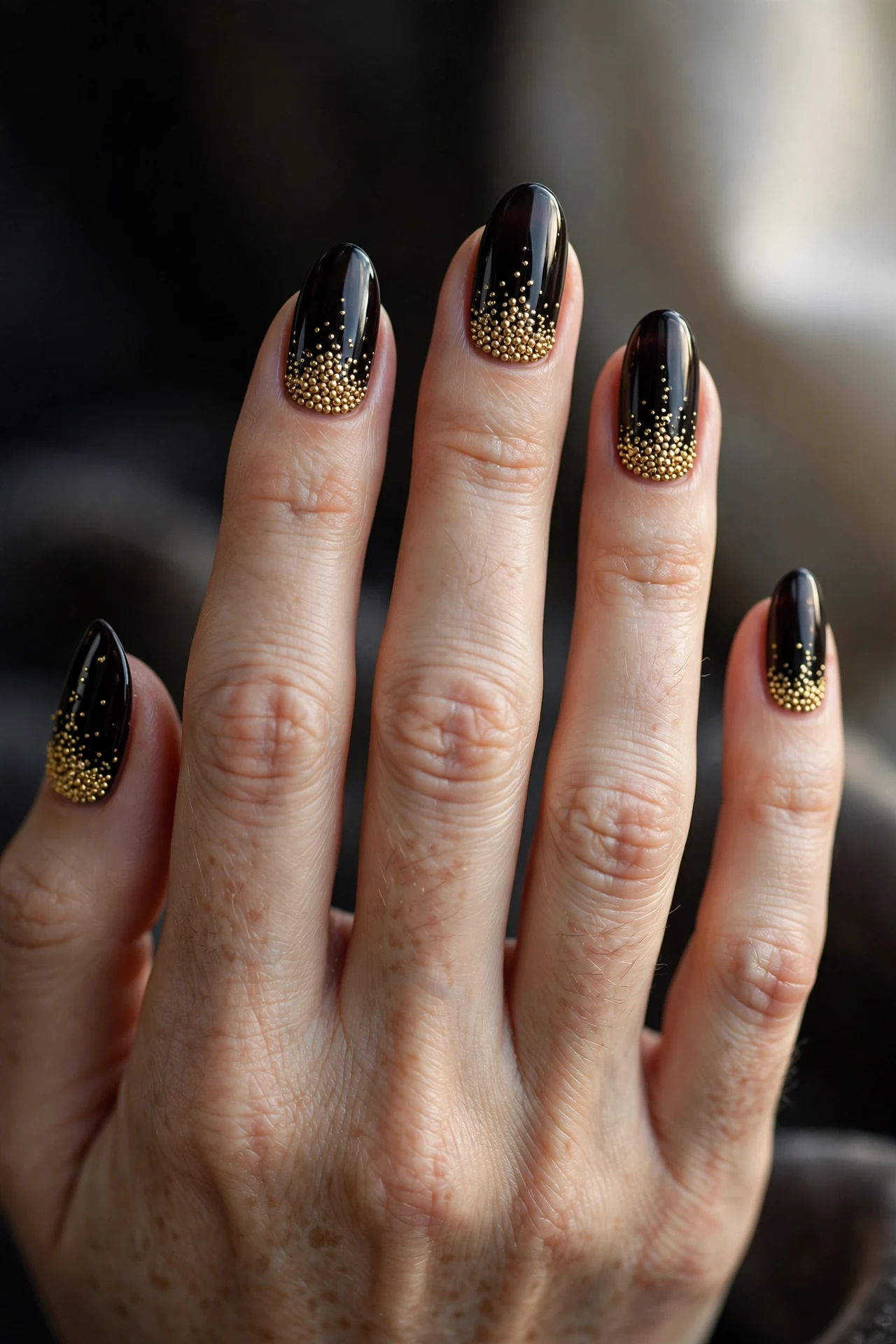
Micro caviar beads scattered densely at the cuticle and fading toward the tip, like champagne bubbles frozen mid-rise. Shape: almond or stiletto shows the gradient best; needs medium length minimum. Difficulty: moderate — beads are fiddly and need a tacky gel layer to grab. Why choose it: of all the looks here, this one is the most tactile. On black-cherry or espresso it reads as pure evening luxury, and unlike single large charms, beads rarely snag because they sit low and dense.
6. The Sculpted Flower

A five-petal blossom sculpted by hand from acrylic or hard gel, finished with a pearl center, on an otherwise clean cream manicure. Shape: oval or almond; the soft petal edges suit rounded tips. Difficulty: firmly salon territory — 3D acrylic sculpting is a trained skill. Why choose it: no pre-made charm looks quite like a flower built for your nail specifically. This is the one to book for a winter wedding or a formal event where the manicure will be photographed.
7. The Crystal French

A classic French with a row of tiny crystals tracing each smile line. This is the “embellished French manicure” the trend analysis calls out by name. Shape: almond or square; the smile line needs a clean edge to follow. Difficulty: moderate — the French must be crisp first, then stones placed with a dotting tool. Why choose it: it modernizes a manicure you probably already wear. Brides, professionals and French loyalists get the trend without abandoning their signature.
8. The Metallic Hardware Set

Matte black nails finished with gold micro-studs, tiny chains draped across the nail and ring-like hardware at the tips. Shape: coffin or long almond; the hardware needs surface area. Difficulty: salon — chains must be anchored properly or they lift within hours. Why choose it: this is 3D nails at their most fashion-editorial, closer to the runway influence the trend analysis notes. Not an everyday set, but unbeatable for a night out when the outfit is equally uncompromising.
9. The Statement Jewel Cluster

A dense cluster of faceted crystals in champagne, rose and clear tones on a single nail, the rest of the set plain deep burgundy. This is the closest to the jewel manicures documented on Selena Gomez in the celebrity roundup. Shape: long almond gives the cluster a proper stage. Difficulty: salon — cluster composition and anchoring matter. Why choose it: maximum drama with minimum commitment: nine plain nails keep it wearable, one jeweled nail does all the talking. Ideal for New Year’s Eve.
10. The Scattered Pearl Dusting

Pearls in mixed sizes scattered loosely across every nail over a champagne base, like condensation on silk. Shape: almond or oval; the organic scatter suits softer tips. Difficulty: easy to moderate at home — irregular placement is the point, so perfectionism isn’t required. Why choose it: soft maximalism. It has the richness of a fully embellished set but the pearls’ matte luster keeps it romantic rather than loud. Gorgeous against velvet-finish bases too, if you want extra dimension.
11. The Micro Charm
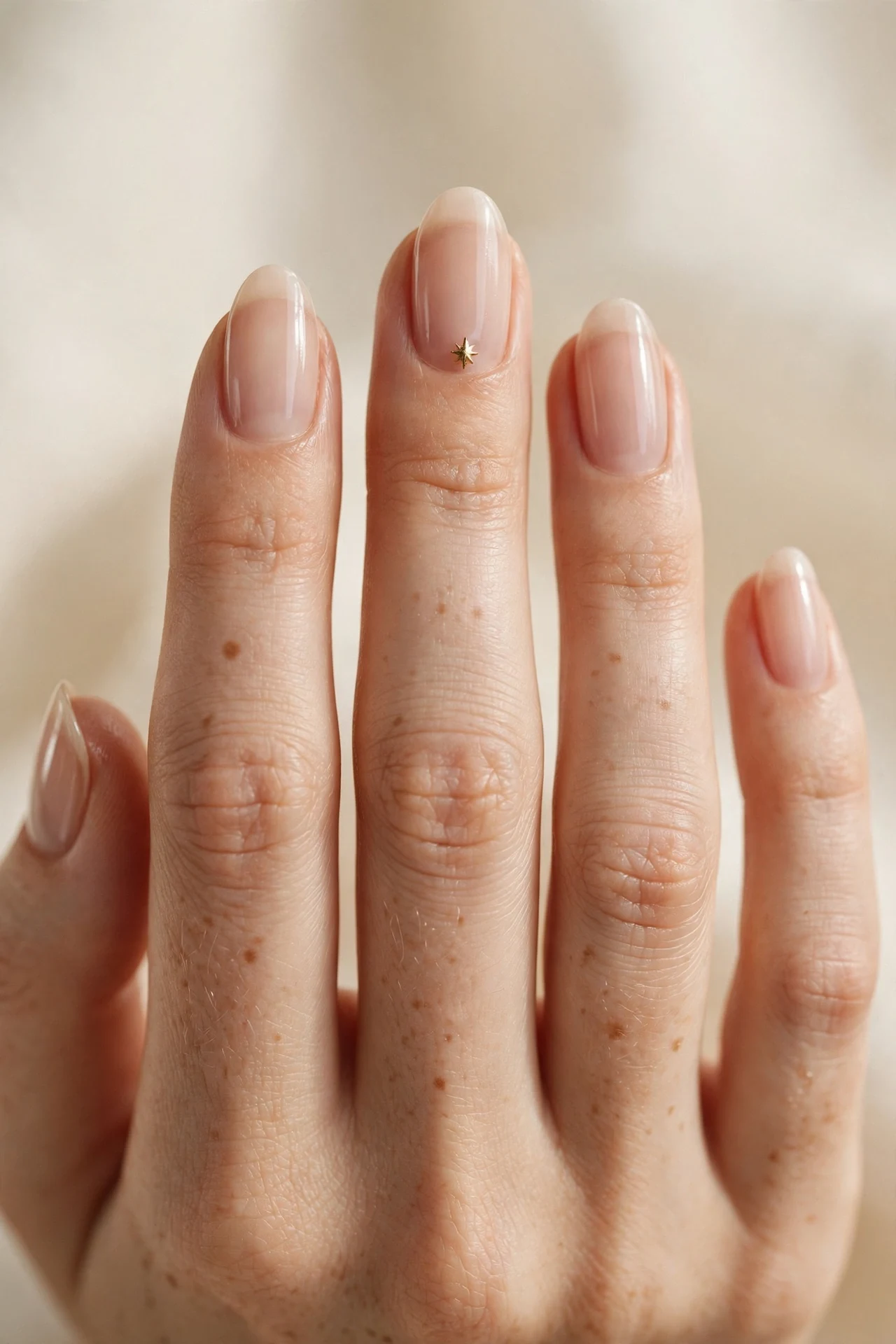
One tiny gold star (or heart, initial, moon) set near the cuticle of a single nail over sheer nude. Shape: any — this works on the shortest natural nails in the list. Difficulty: beginner; it’s the easiest 3D look here by a distance. Why choose it: the gateway embellishment. It survives strict dress codes, costs almost nothing to try, and if you lose the charm in a week, the nude manicure underneath still looks intentional.
12. The Opal Frost

Iridescent, opal-effect crystals clustered over an icy blue base, shifting pink-blue-clear as the light moves. Shape: almond; the cool palette suits the season’s longer shapes. Difficulty: moderate — crystal placement is easy, but the icy base needs to be flawless underneath. Why choose it: the most seasonal of the twelve. It captures actual winter — frost, ice, low pale light — in a way no flat polish can, and it photographs like nothing else in December daylight.
Should you get 3D nails at a salon or do them yourself?
Go to a salon for anything sculpted, heavy or structural; do flat-back crystals, pearls and micro-charms at home. The dividing line is attachment method. Flat elements with a flat back sit happily in a layer of builder gel or gem gel and can be cured or glued at home with a wax pencil and a steady hand. Anything with real height — 3D bows, acrylic flowers, chains, large charms — needs professional anchoring: the tech builds a small “nest” of product around the base of the piece so it can’t lever off, then seals the edges with top coat.
The most common DIY mistake is reaching for superglue on a finished manicure. It bonds, but it bonds brittle — the first knock pops the stone off and can take polish with it. Gel-based attachment flexes with the nail and releases more cleanly at removal. If you’re embellishing press-ons, the calculus changes slightly: decorate the tips before application, and read our guide on making press-on nails last first, since a lifting press-on takes its charms with it.
Who does this trend actually suit — and who should skip it?
It suits anyone willing to trade a little practicality for a lot of personality — with the quieter looks suiting nearly everyone. The single pearl, the cuticle crystal line and the micro charm work on short nails, in conservative offices and on hands that do real work. The maximalist sets — charm clusters, hardware, sculpted flowers — suit longer nails and occasions where the manicure is part of the outfit: parties, weddings, holidays, photoshoots.
Skip the heavy pieces if you type all day on short nails (charms catch between keys), work with your hands in healthcare, food or childcare, or can’t stand the feeling of texture on your fingertips — some people find raised embellishments genuinely irritating, and no trend is worth two weeks of fidgeting. Very short nail beds also struggle to anchor large charms; the stone overwhelms the nail and pops off faster. In all of those cases, the minimalist end of this same trend still belongs to you.
How long do 3D embellishments actually last on the nails?
Flat-back crystals and pearls set in builder gel typically last as long as the manicure itself — two to three weeks. Larger or taller charms usually loosen sooner, often within five to ten days of normal wear. Height is the enemy of longevity: a low, flat stone has little leverage against it, while a tall charm acts like a tiny handle that every pocket, zipper and hairbrush grabs. Placement matters too — stones near the cuticle survive longer than stones at the free edge, which takes the most impact.
A few practical habits stretch the wear. Seal the edges of every stone with a thin brush of top coat — not over the top of faceted crystals, which dulls their sparkle, but around their bases. Avoid using nails as tools (the charm always loses that fight). Keep a tiny tube of nail glue in your bag; a charm re-glued within the hour usually re-seats invisibly, while one left dangling tears the polish around it. And accept the knitwear tax: fine-gauge sweaters and embellished nails are natural enemies from November through February. If a charm does pop off mid-week, a single accent stone removed cleanly still leaves a wearable manicure — another argument for starting with looks 1, 2 or 11.
How much do embellished 3D nails cost?
Expect embellishment to add roughly $15–$35 to a standard manicure price, with full maximalist sets using premium crystals landing around $90–$150+. These are editorial estimates, not surveyed prices — rates vary widely by city, salon tier and materials, so treat them as a budgeting guide. A single accent nail with a few crystals is usually the cheapest salon ask; a ten-nail charm composition with hand sculpting is priced closer to nail art by the hour. DIY flips the math: a wheel of mixed rhinestones and a bottle of gem gel cost less than most salon upcharges and cover dozens of manicures.
Maximalist or minimalist: which version of the trend fits you?
Choose maximalist for occasions, minimalist for everyday — or mix both across the two hands’ worth of looks above. The table below compares the two approaches honestly so you can pick your lane.
| Maximalist (looks 3, 5, 8, 9, 12) | Minimalist (looks 1, 2, 4, 11) | |
|---|---|---|
| Commitment | High — the set is the outfit’s centerpiece | Low — reads as a detail, not a statement |
| Cost | Salon upcharge; premium crystals add up | Often DIY-able for the price of a coffee |
| Durability | 5–10 days for tall pieces; snag-prone | 2–3 weeks; sits low, rarely catches |
| Best occasions | Parties, weddings, holidays, photoshoots | Office, everyday, first-time 3D wearers |
| Nail length needed | Medium to long | Any, including very short |
| Maintenance | Carry glue; expect repairs | Nearly none |
Frequently asked questions
Are 3D nails practical for everyday wear?
The minimalist versions are. A single pearl, a cuticle crystal line or one micro charm sits low on the nail and survives typing, cooking and gloves without complaint. Full charm clusters and tall sculpted pieces are less practical — they catch on knitwear and hair — so treat those as occasion manicures rather than daily drivers.
How do you attach rhinestones so they don’t fall off?
Set them into an uncured layer of builder gel or a dedicated gem gel, position with a wax pencil, then cure. Once cured, seal around — not over — each stone’s base with top coat. Avoid superglue directly on polished nails: it bonds brittlely, pops off on impact and can pull polish up with it.
Can you do 3D embellishments on short nails?
Yes, with the right scale. Single pearls, micro charms and cuticle crystal lines all work beautifully on short nails — look 11 was designed for exactly this. Skip large charms and dense clusters on short nail beds: the decoration overwhelms the nail, looks crowded and pops off faster because there’s less surface to anchor to.
How do you remove 3D nail charms without damaging your nails?
Never pry or pick them off. Soak the nails in acetone as you would for gel removal; most gem gels soften and the pieces slide away. For stubborn charms, a wooden cuticle stick eased gently under the edge after soaking works — if it resists, soak longer rather than forcing it.
Do 3D embellishments work on press-on nails?
They do, and press-ons are actually a forgiving canvas since you can decorate before applying. Attach stones with gem gel and cure, or use nail glue for pre-cured sets, then apply the press-ons as normal. The weak link is the press-on’s own adhesion — a lifting tip takes its charms with it — so solid application matters more than the decoration.
What is the difference between 3D nail art and textured nail art?
3D nail art adds discrete raised objects — a pearl, a charm, a sculpted flower — with clear edges and height. Textured nail art creates surface effects across the whole nail: velvet, sugar, chrome or magnetic finishes that you feel as grain rather than see as objects. Caviar beads sit between the two: individual beads, but worn as an all-over texture.